Some words carry more than a simple definition. In the Palestinian context, many words often take on added meaning due to the history, culture, and lived experiences of the Palestinians. Let’s dive in.
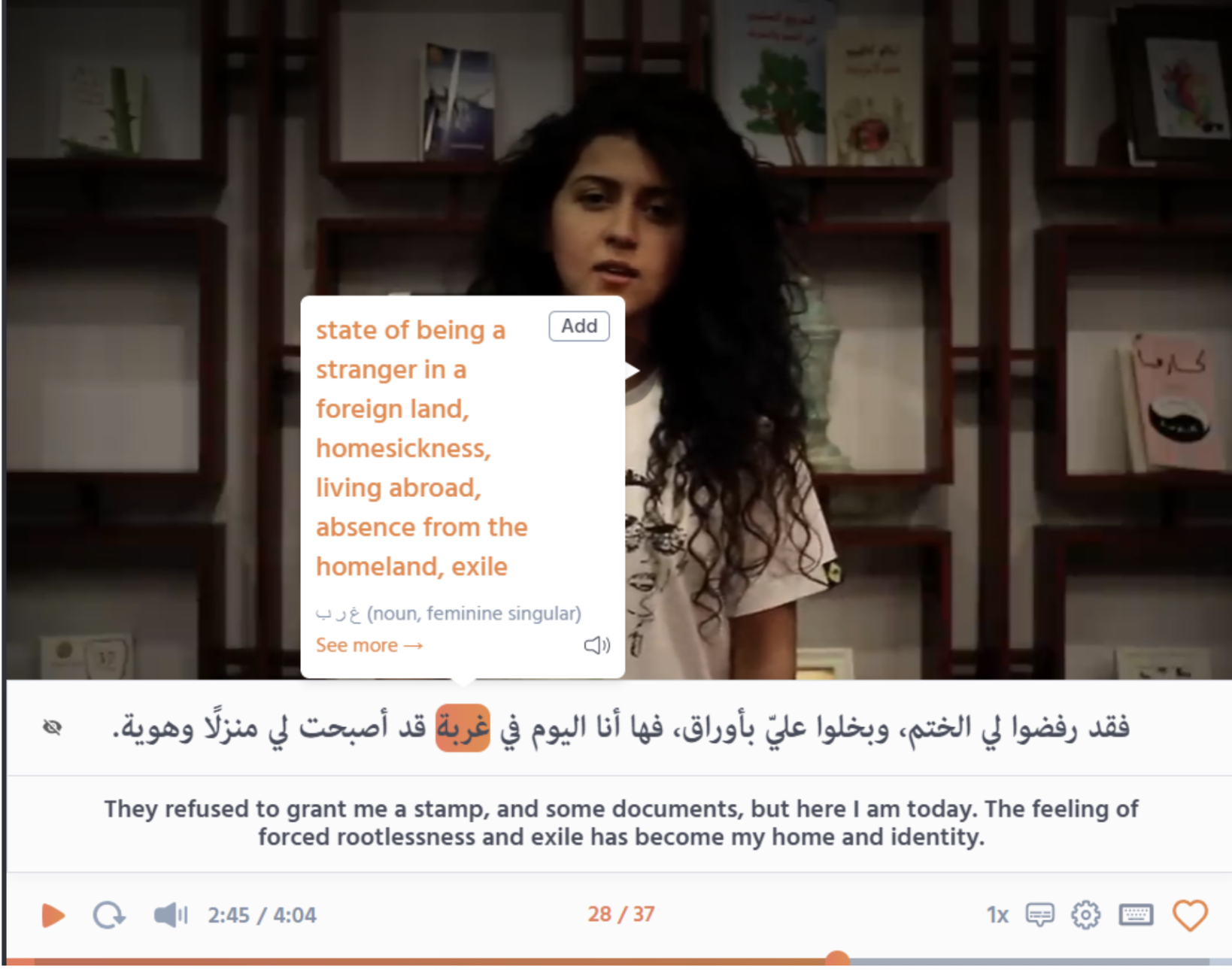
غربة (ghurba) 🔊
In general, ghurba refers to the feeling of estrangement that comes from being away from home. Listen to how Palestinian poet Farah Chamma reflects on her feeling of alienation in exile:
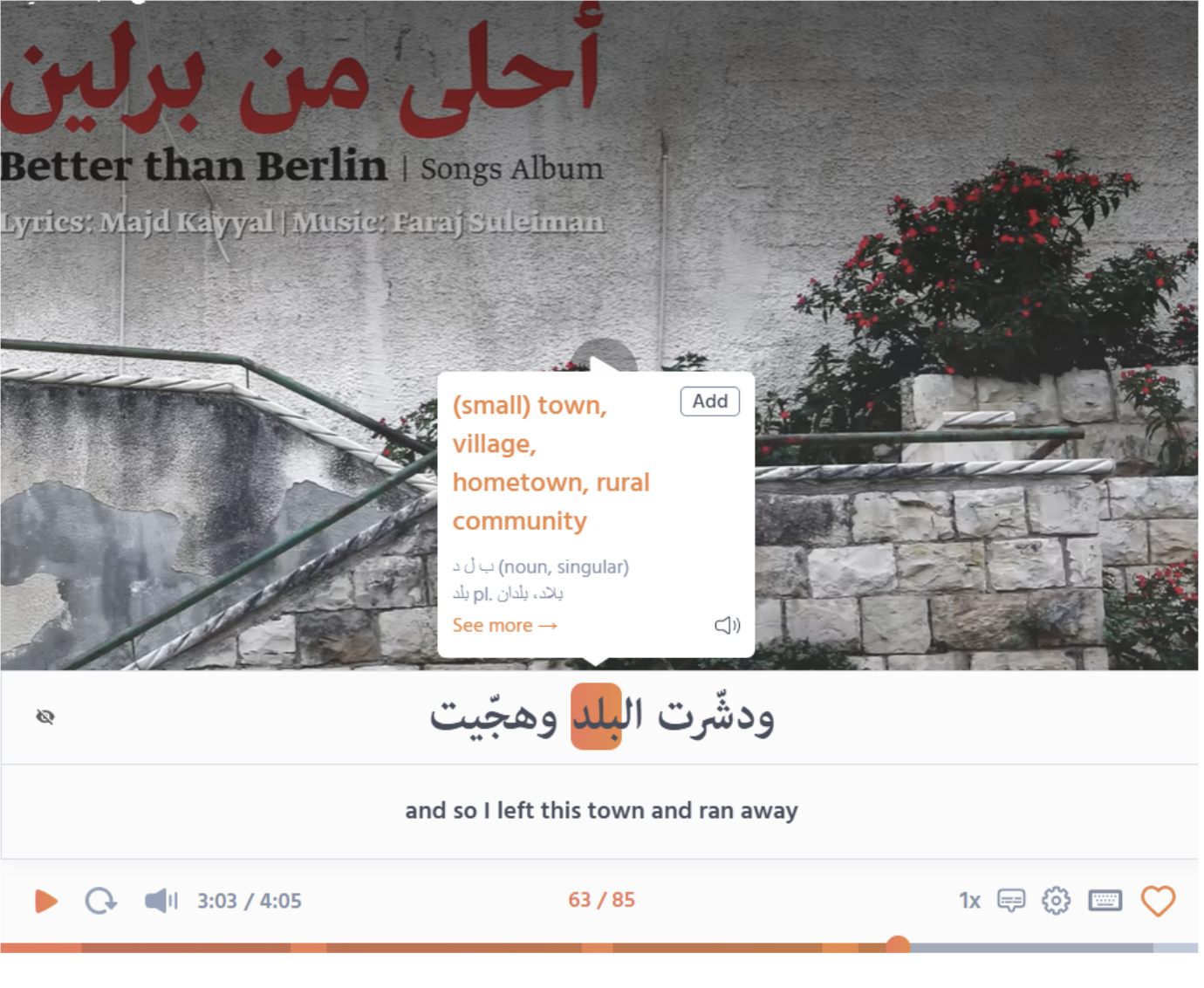
بلد (balad) 🔊
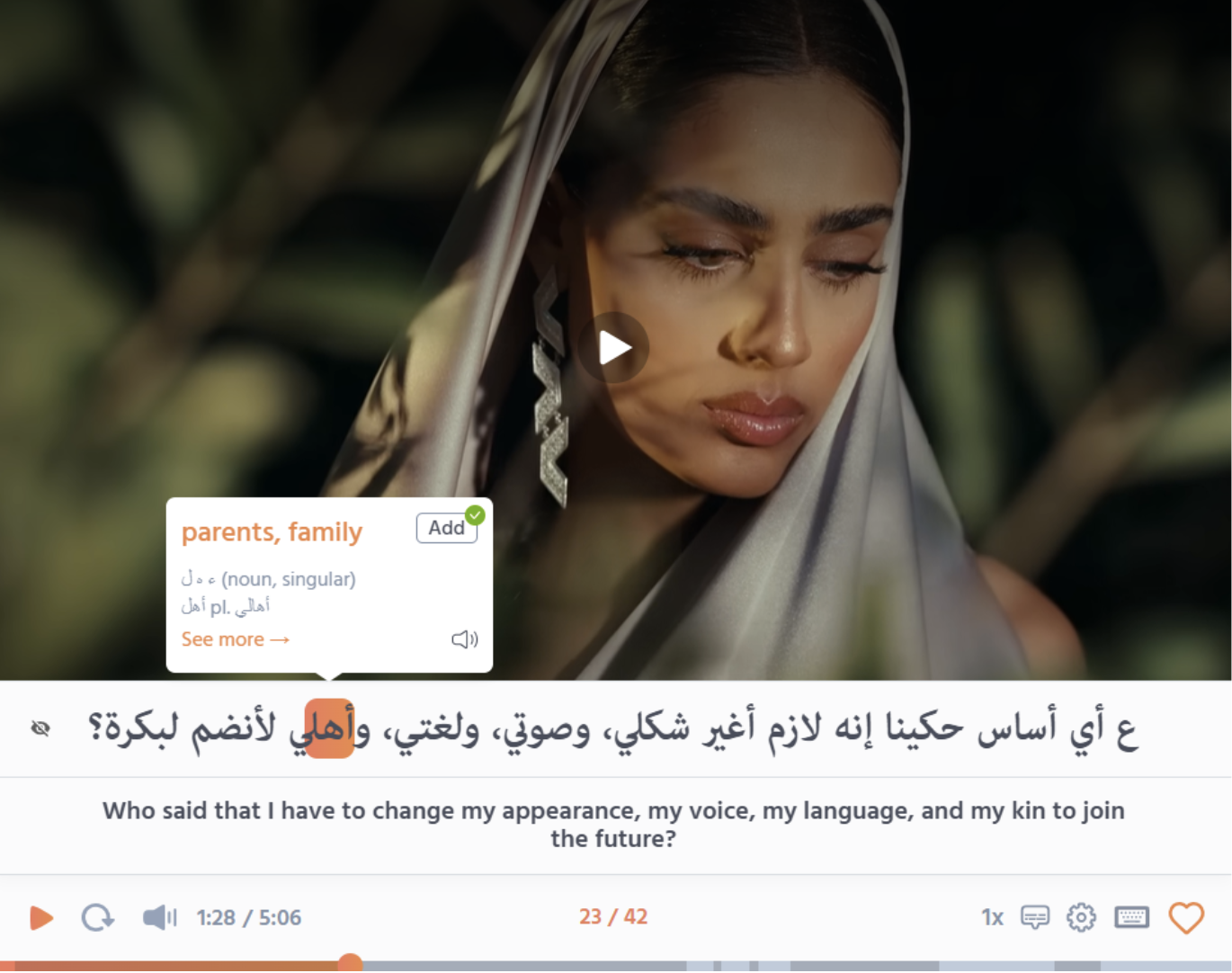
On the surface, balad simply means “country” or “town,” but it often points to a particular hometown or place of origin, even if that place is no longer accessible.
Listen to how the Palestinian musician Faraj Suleiman longs for his home of Haifa in an album entitled “Better Than Berlin” (أحلى من برلين):
لاجئ (laji’) 🔊
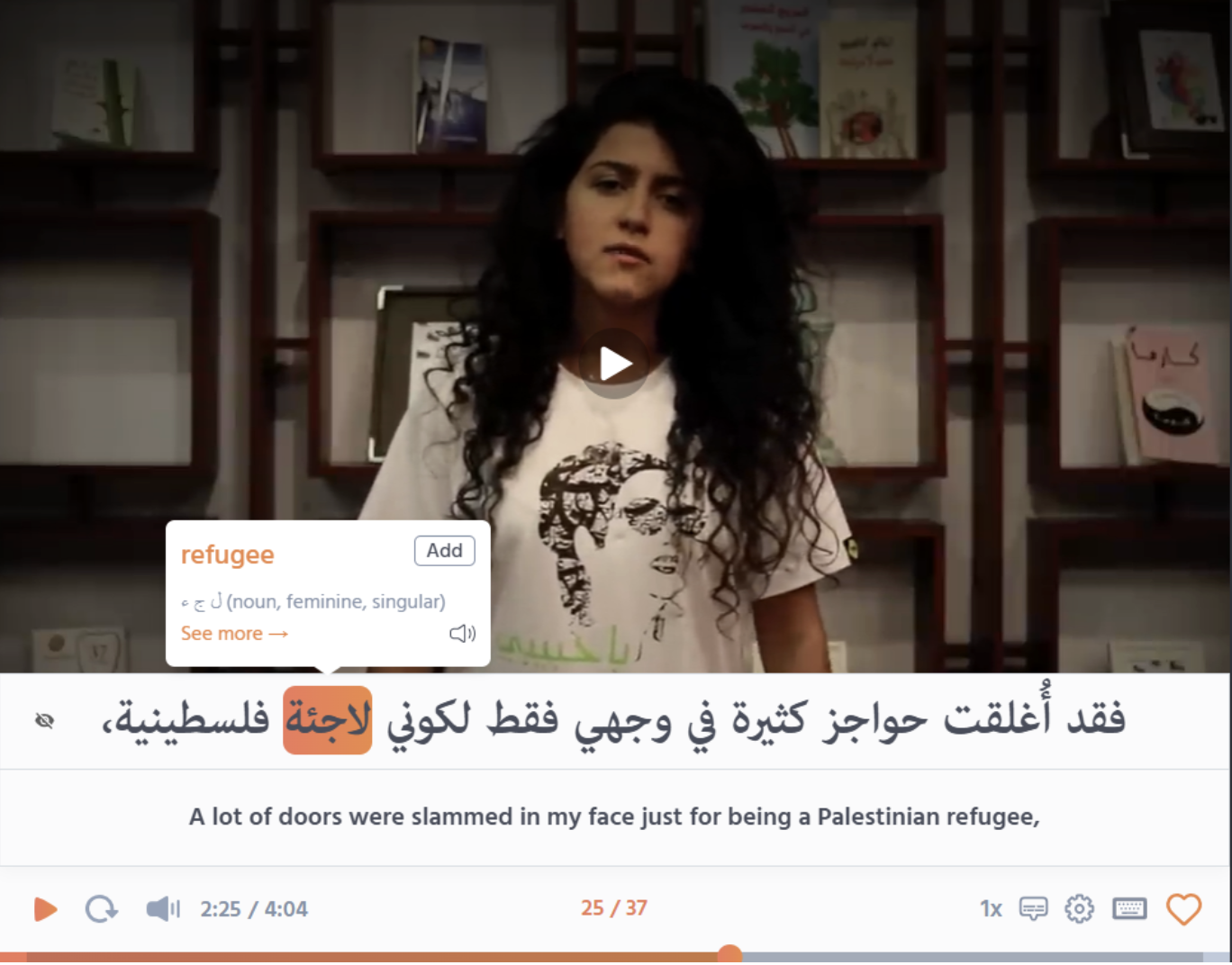
The word laji’ means “refugee.” It’s a familiar term in English, usually used as a legal or descriptive category.
For Palestinians, that displacement is intergenerational. Today, around two-thirds of Palestinians—often estimated at around 8 to 10 million people—are refugees or descendants of refugees, many tracing their displacement back to the events of 1948 and the years that followed.
The Palestinian poet Farah Chamma was born in the United Arab Emirates and wasn’t allowed to live in Palestine. Hear how she describes herself:
معلش (ma‘lesh) 🔊
Ma‘lesh is one of those words you hear all the time. It can mean “it’s okay,” “never mind,” or “don’t worry about it.” It’s Levantine Arabic, not Modern Standard.
In everyday use, it often comes up in small moments. When something doesn’t work out, when plans fall through, when things don’t go as expected. It doesn’t fix anything, but it helps smooth things over.
Used often enough, it becomes part of how people keep going.
A performance called ‘معلش فلسطين’ (Maʿlesh Palestine), performed by Palestinian students at their school, expresses the idea that any hardship can be endured as long as it is a sacrifice for Palestine.
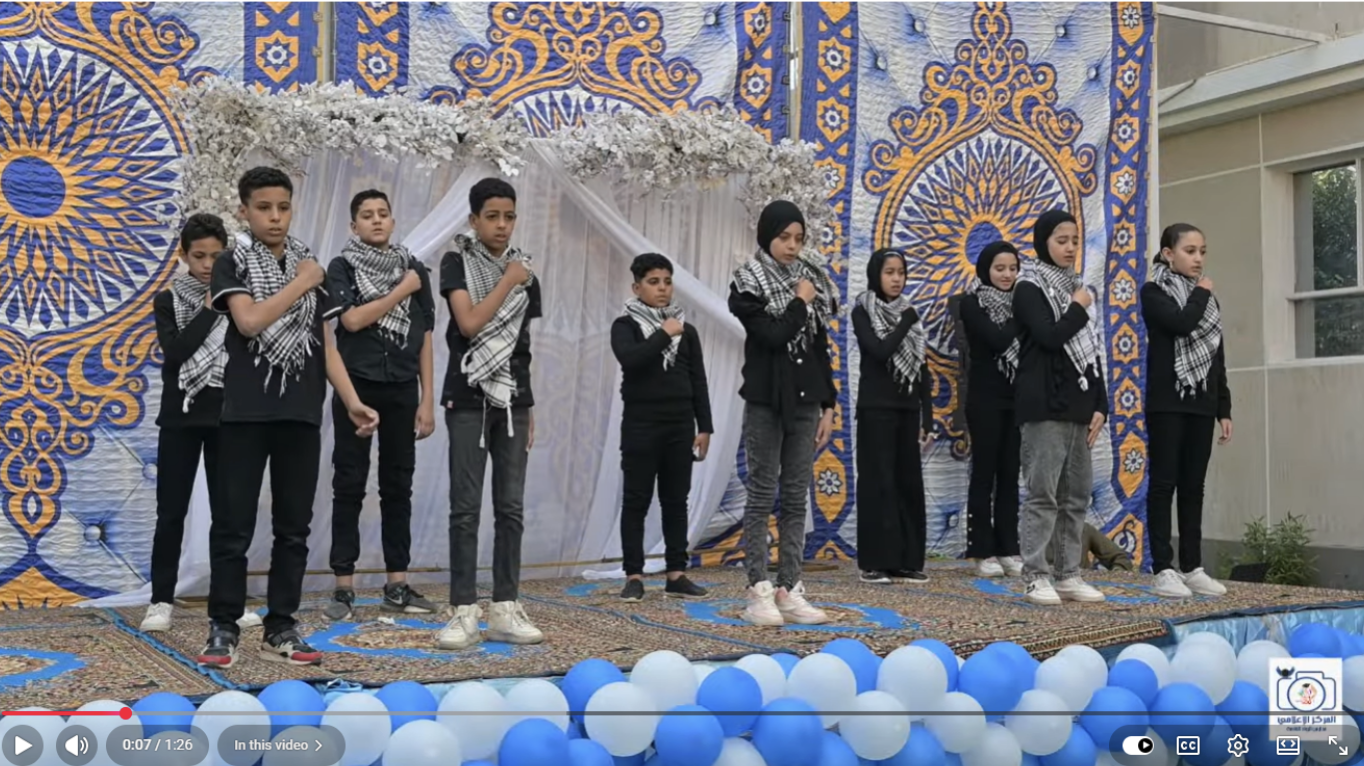
The song was written and composed by the Jordanian artist Saed Alajmi as a gesture of condolence to the Palestinian journalist Wael Al-Dahdouh, after his response to the killing of his children and grandchildren was: ‘They take revenge on us through our children… maʿlesh.’
شهيد (shaheed) 🔊
The word shaheed is usually translated as “martyr.” It’s widely used across Arabic, with roots in religious and historical contexts.
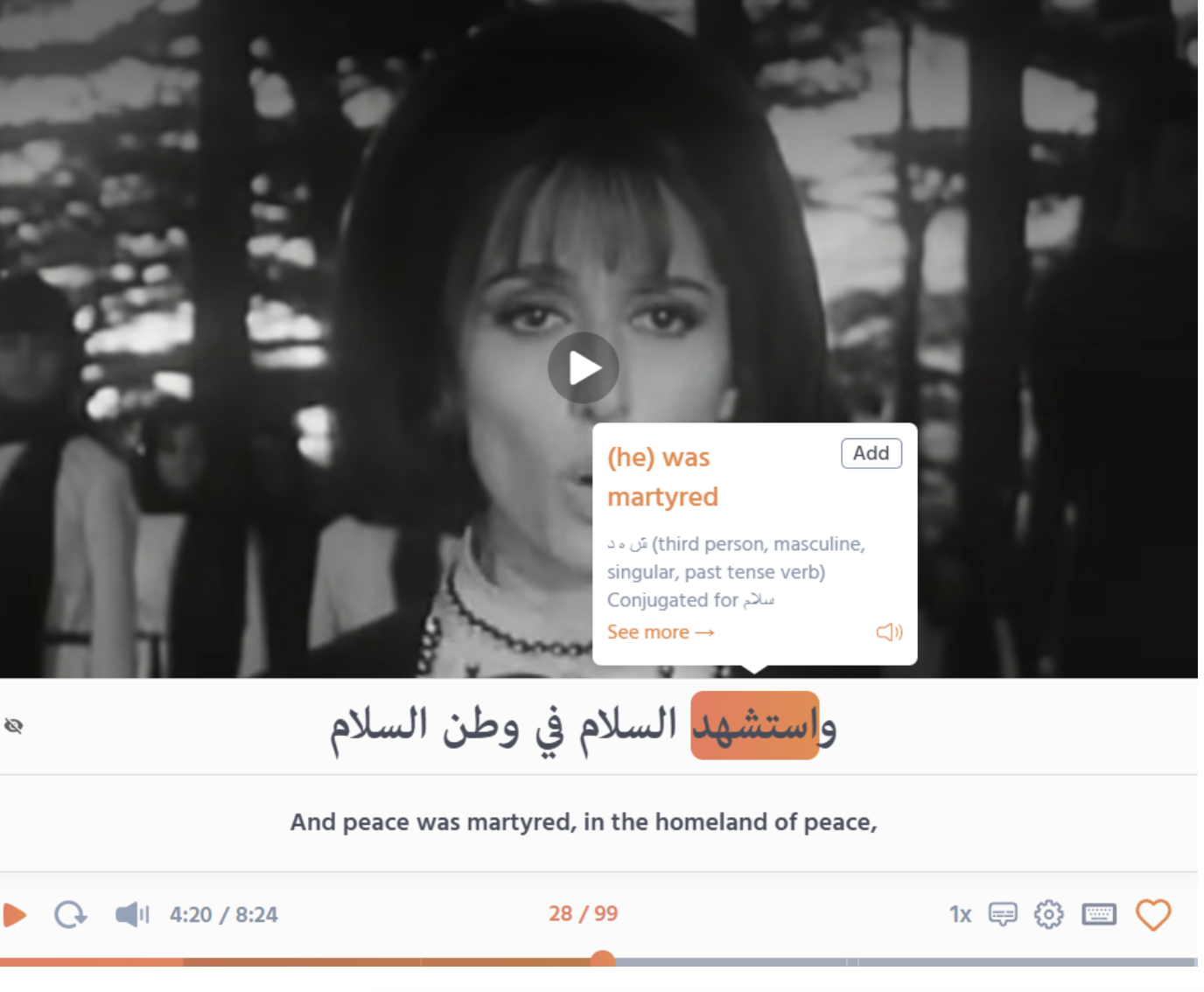
In the Palestinian setting, it is commonly used for someone who has been killed in the conflict. You’ll often hear related forms in Arabic-language media as well. For example, outlets like Al Jazeera may use the verb استُشهد (ustushhida), meaning “was martyred,” rather than قُتل (qutil), which simply means “was killed.”
The difference is not just linguistic. استُشهد carries a sense of how the person is remembered, not just what happened.
For some, that meaning is shaped in part by religious language and ideas about sacrifice. Others may use the term in a more general or social sense. Because of that, the word can carry different layers of meaning depending on who is using it and in what context.
Listen to a song by the Lebanese singer Fairuz written shortly after Israel captured Jerusalem in 1967. The lyrics are Modern Standard Arabic and use the verb istashhada (was martyred) to express both the death of peace and of Palestinians defending Palestine.
These words don’t tell the whole story, but they point to something consistent. In Palestine and among Palestinians, they speak to place, separation, and staying connected over time. They’re part of how Palestinians describe their own lives, on their own terms, and how they hold on.
Subscribe to the Palestine Nexus Newsletter: