

Rescuing cats during the Gaza genocide
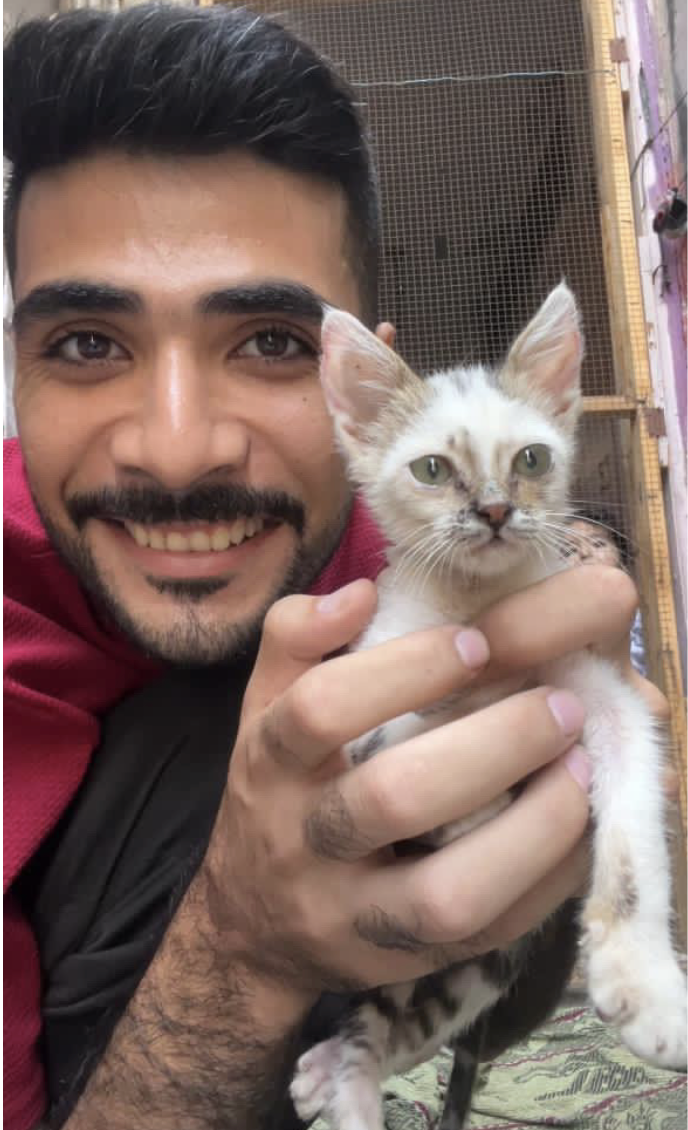
Moumen Ibrahim with Rizq, one of the many cats he rescued. Photo courtesy of the author.
January 7, 2026 — “I’ve loved cats since I was a child,” Moumen Ibrahim, 26, from Nuseirat Refugee Camp told Palestine Nexus. “But during the war, what I saw broke my heart: starving cats everywhere, people passing by without looking. I knew I had to do something.” In early 2024, Moumen formed a small volunteer network, the Animal Care Team, to rescue and feed stray animals.
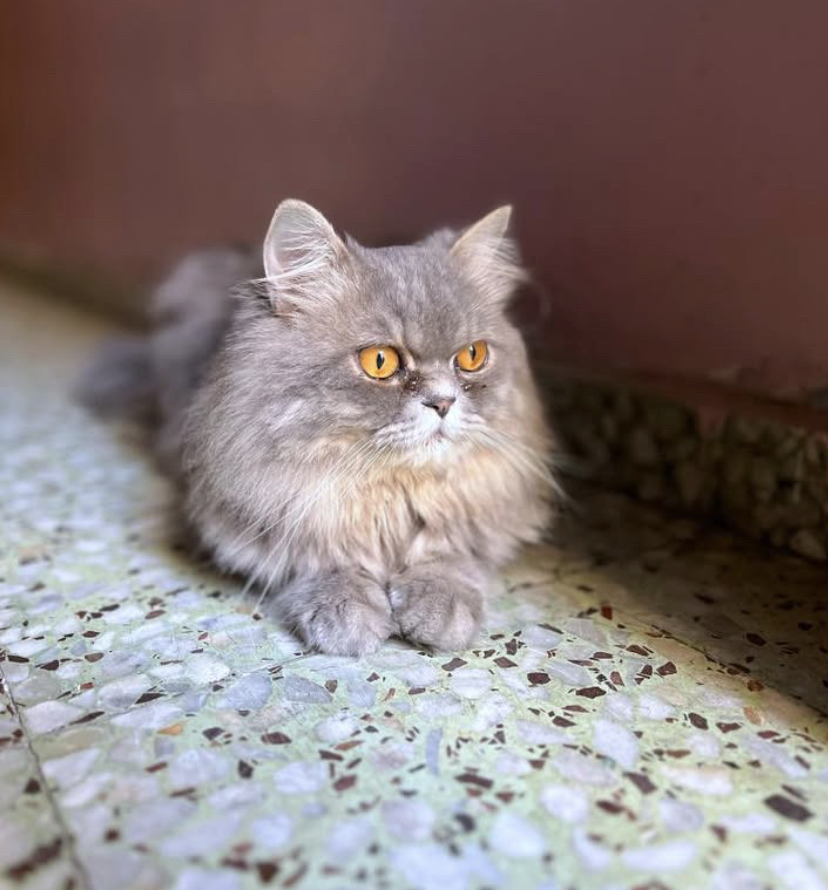
One of the many cats who Moumen Imbrahim cares for in his home
Ibrahim started in his home with nothing but a few cans of tuna bought with his savings. Volunteers soon joined him from across Gaza, each caring for the stray and displaced animals in their own neighborhood. They coordinated through WhatsApp, sending alerts for injured animals and rushing to help whenever someone was close enough to respond. Saving even one cat meant traveling hours through dangerous roads to get food and medicine, often to return with nothing.
“Some animals died in front of me because I couldn’t find treatment,” Moumen said, his voice in a whisper. “It feels like watching someone die slowly while you’re helpless.”
As the famine deepened, Ibrahim’s work grew more difficult. Food vanished, water became scarce, and even bread became a dream. He mixed flour, crumbs, and tiny scraps of tuna just to keep a single stray cat alive. “It was painful to see them starving while I couldn’t help,” he said. “But I couldn’t walk away.”
Among the many animals Ibrahim saved was Rizq, a tiny paralyzed kitten nearly left for dead. He found Rizq in March when some neighbors asked him to help a tiny kitten with partial paralysis.
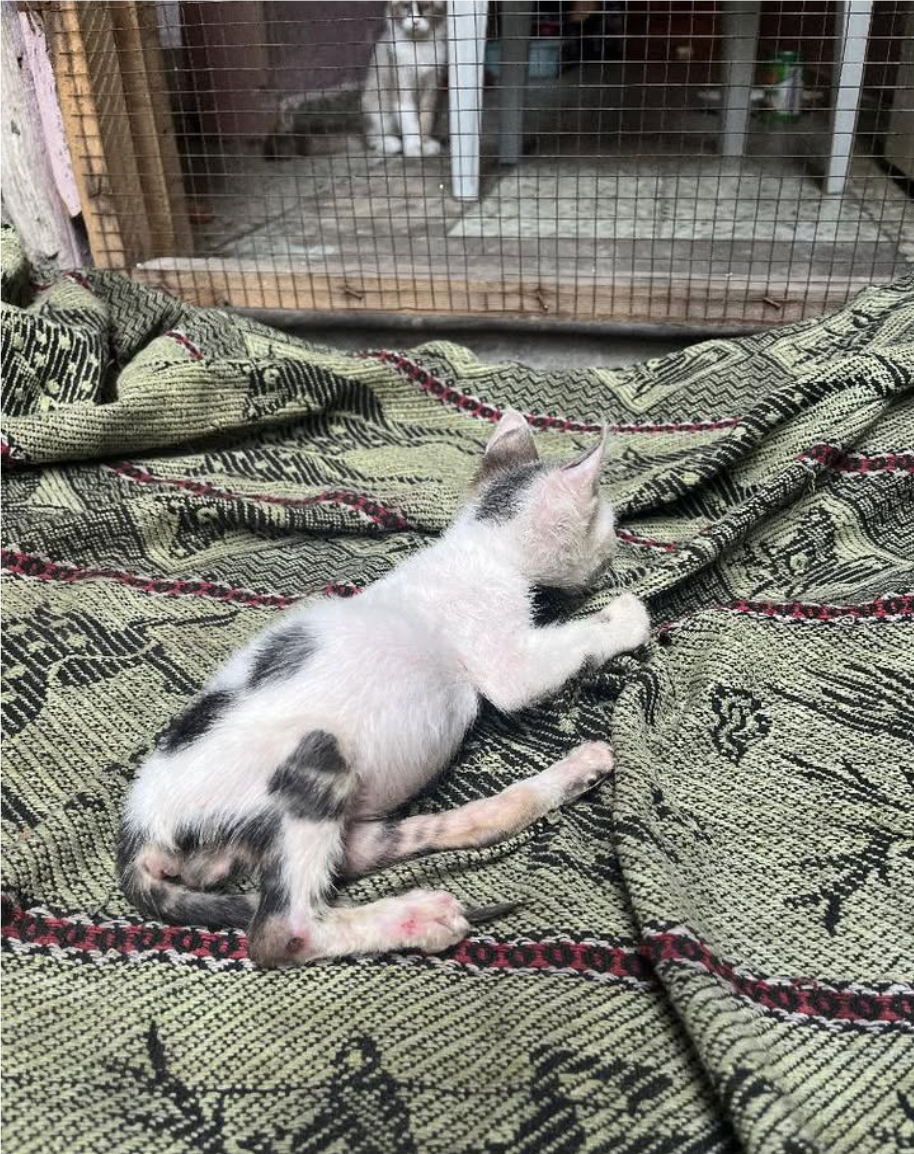
Rizq was a paralyzed kitten when Moumen rescued him. Photo provided to the author.
A veterinarian gave Rizq a 10% chance of survival, but Moumen took him home anyway. After 12 days of care, Rizq survived. Rizq requires daily attention and specialized care. Ibrahim spends hours each day administering ointments for sores and skin infections that are difficult to treat under siege, feeding carefully measured meals to ensure Rizq gets enough nutrition despite his disability, helping him move and exercise gently,so he doesn’t lose muscle strength.
Even with his challenges, Rizq plays and interacts with Ibrahim. “Every small improvement feels like a victory,” he said. “He is fragile, but his love for life is so strong. Caring for him reminds me why I can’t give up on any animal.”
As Israel’s bombardment on Gaza intensified, clinics were bombed and supplies disappeared. Dr. Abdullah Mortaja, 29, kept his clinic in Nuseirat open whenever possible, using the few supplies he had left. Despite its small size and limited resources, it has become a refuge for injured and starving animals during the war. “Even when everything around us was collapsing, I couldn’t ignore them,” he said. ‘They, too, are living souls.”
Morataja said that animals in Gaza suffered as deeply as humans during the genocide.
“The psychological trauma is just as real for animals as it is for people. Many cats shake uncontrollably after airstrikes. Some lose their appetite for days. They develop symptoms just like humans under extreme stress.”
He paused before adding, “But despite everything, people still bring us animals wrapped in blankets. That small act… it keeps us going.”
Even pets with loving families have suffered in the genocide. For two years before the war, Bella lived with the Abdelhadi family in Tall Al-Hawa. Ahmed, 17, and his family of 6 took care of her with regular veterinary care, proper food, and vaccinations. “Bella isn’t just a pet,” Ahmed told Palestine Nexus. “She’s part of our family.”
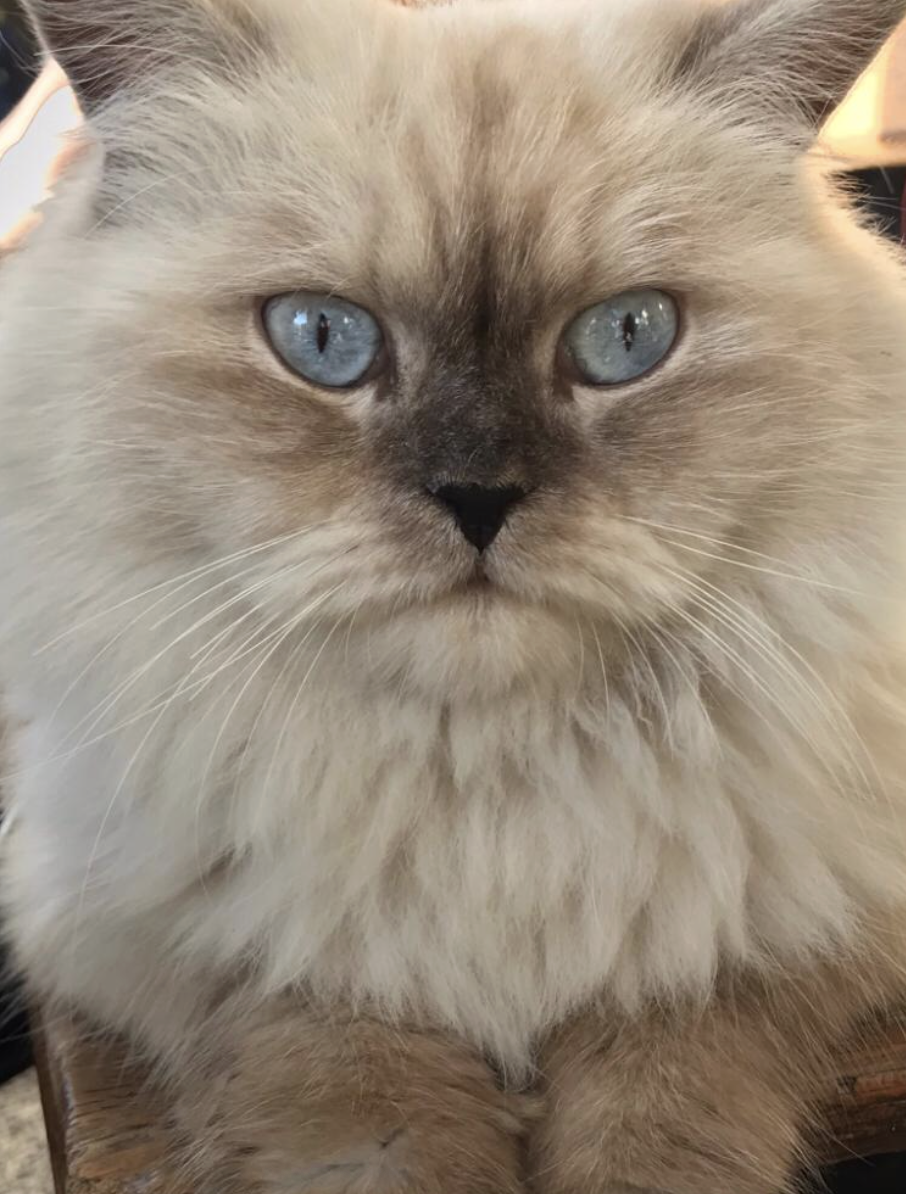
The Abdelhadi family found their cat, Bella, sitting on the same chair where they had left her, trembling. Photo provided to the author
When the war intensified, in March 2025, the family was forced to flee their home to Deir Al-Balah. They had to make a tough decision. Fearing they might end up somewhere unsafe for her, they left Bella behind with large amounts of food and water. But after ten days, when it became clear the war would not end soon, they risked the dangerous journey from Deir al-Balah to Gaza City to get her back.
They found Bella sitting on the same chair where they had left her, trembling, shocked, and unable to recognize them at first. Only after hearing her name repeatedly did she remember and return to their arms. It was not just a rescue; it was a reunion with a missing family member. They were heartbroken when they saw Bella, shocked by the state she was in and unsure how to help. But as the days passed, they adapted, learned what she needed, and slowly became part of her healing.
Every airstrike sends Bella running to hide beneath furniture, mirroring the same fear her family lives with. During one of the many times the family was displaced, she went missing. Several people searched tirelessly until she was found.
Bella had become a source of hope in a place where hope was scarce.
But life since has been a struggle. Her usual cat food is gone. Alternatives often made her sick. Ahmed travels through neighborhoods where there was active bombardment or collapsed buildings, searching for pet food or clean sand for Bella’s litter. For Ahmed’s family, Bella’s presence is more than comfort. She is the thread connecting them to the life they once had. For the younger family members, she’s a companion and a symbol of resilience. “Animals here are no less valuable than humans,” Ahmed said. “They are part of our lives and our memories. What’s happening is inhumane, and it spares no one.”
Dr. Mortaja has closely observed the role animals played in peoples’ lives during the genocide. “People assume animals are secondary in war,” he said. “But to many families, their pets are their last remaining connection to normal life. Losing them is another kind of grief.”
The bond between people and animals becomes more than companionship; it is an act of resistance and a reminder that even in war, humanity survives in the smallest gestures: a boy risking his life to rescue his cat, a volunteer using food scarce to himself to feed a starving stray, a vet keeping his door open when everything else has fallen.
The stories of Bella, Rizq, and Gaza’s countless unseen animals echo a single truth: every life carries worth, and every act of mercy is a declaration that compassion still exists, even when the world tries to erase it. Until this genocide ends, their suffering and their courage will remain a testament to the resilience of Gaza, where even the most fragile souls continue to fight for survival, love, and a chance to live in peace.
If you enjoyed this article, check out our online courses on the history of Palestine and Israel, Zionism, the Palestinians and Jewish anti-Zionism.
Subscribe to the Palestine Nexus Newsletter: