

Israel blockades children’s toys: Eid during the Gaza genocide
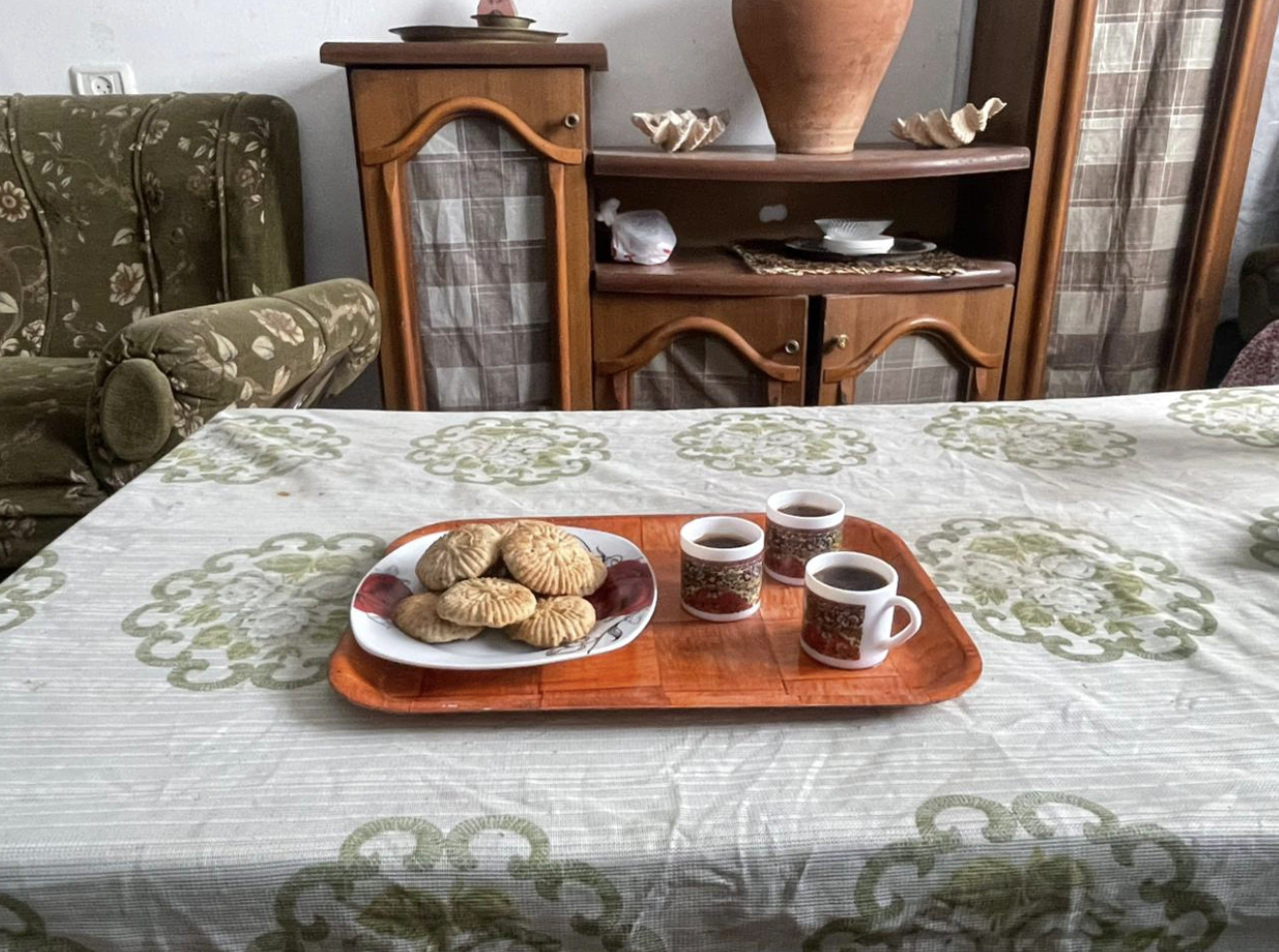
Coffee and maamoul – buttery pastries filled with dates – is served to guests on Eid, symbolizing hospitality and celebration. Photo by Khaled Al-Qershali
Khaled Al-Qershali
Before the genocide, Eid Al-Fetar was one of the happiest occasions for me. The day before Eid, I used to go shopping with my friends, buy new clothes, and visit my relatives, all long-kept celebratory traditions of Eid. The markets would be full of people, laughter, and anticipation, as families rushed to complete their last preparations before the celebrations began.
After shopping, my friends and I would take my friend Mohammed’s car and drive to the beach to meet other friends. We would play cards together while chatting about our plans for Eid. Those evenings felt carefree, filled with the excitement that always accompanied the arrival of the holiday.
On Eid day, I used to visit my whole extended family, eating sweets in every house I visited. Eidiyah, the money traditionally given to young children and women, was easy to afford. I used to give Eidiyah to my mother and my younger sister. It was a simple gesture, but one that carried joy and warmth within our family.
This Eid, nothing remained the same. Although we are living in a so-called ceasefire, the financial crisis has worsened. Cash is almost nonexistent in the Strip, and people have begun exchanging money through bank transfers. Giving Eidiyah to children became a challenge; they do not have bank accounts.The value of the money itself has declined.
As US-Israeli forces launched a war against Iran, Gaza’s markets were further affected. Food and clothing prices skyrocketed. People who could barely afford food for their children were no longer able to buy sweets for visiting relatives. The joy that once defined Eid was replaced with quiet anxiety over how families would manage even the most basic traditions.
On 20 March, the day before Eid, I went to the Al-Swidii market to help a friend who was working at a stall there. At first glance, it seemed that conditions had improved as hundreds of people filled the streets. But in reality, very few were buying anything. People were simply walking through the market, looking at items they could not afford. For example, a pair of children’s shoes that would have cost around 30 ILS [$8] before the genocide was now selling for 100 Israeli shekels [USD $30]. The crowds created the illusion of normal life, but the empty hands of most shoppers told a different story.
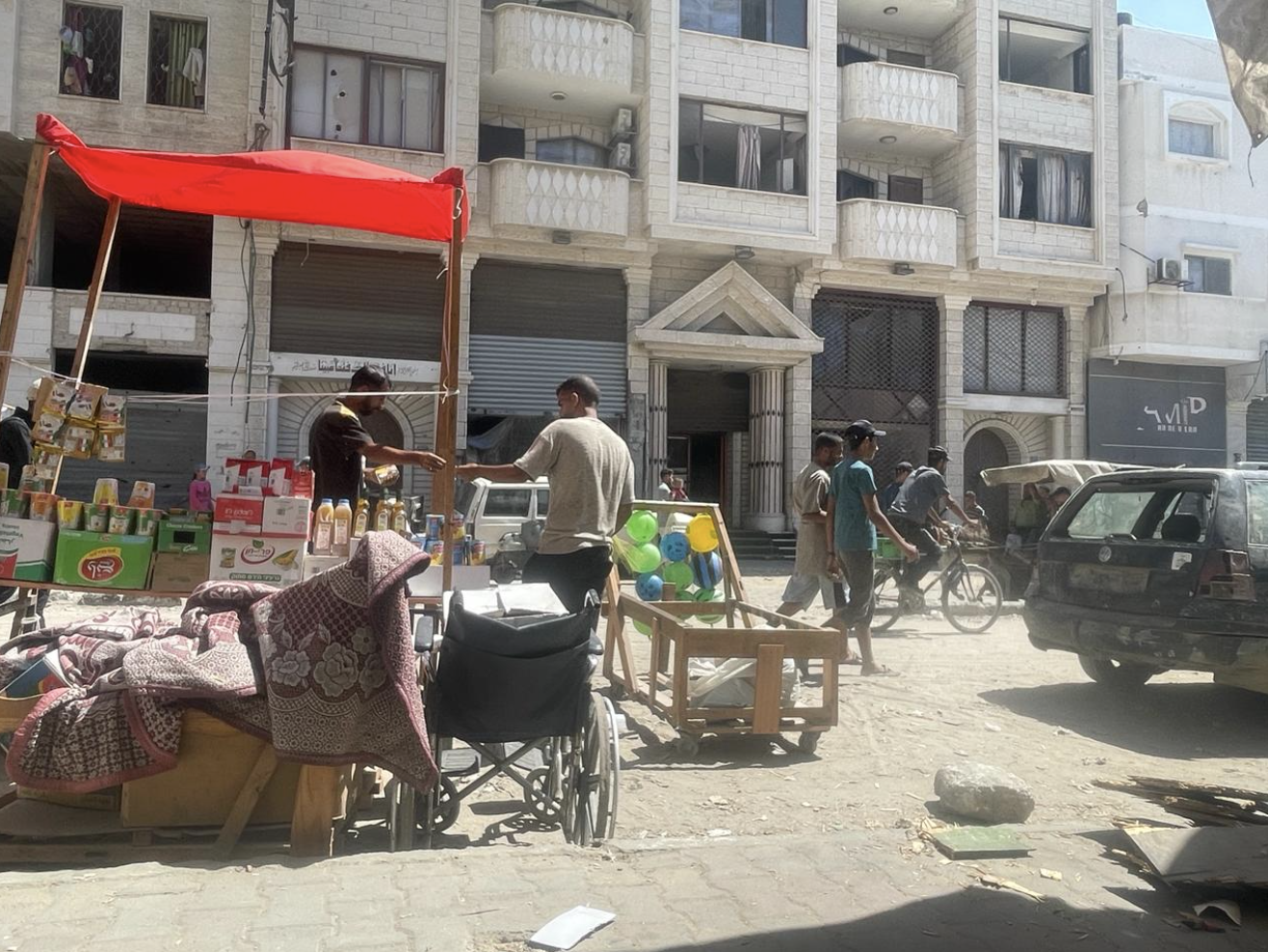
A roadside shack in Al-Swidi market selling various packaged goods, drinks, and household items arranged on tables. March 2026. Photo by Khaled Al-Qershali
As I had done before the genocide, I visited many of my relatives during Eid. But most of them were now living in tents after losing their homes. Many others could not even return to their destroyed neighborhoods, especially those from Shuja'iyya, which remained within the so-called yellow line and largely inaccessible. The visits continued, but they were no longer celebrations; they were gatherings of people trying to comfort one another.
Malak Shallah, reported by Khaled Al-Qershali
Malak Shallah, 16, from the Shuja'iyya neighborhood, has now spent three Eids in displacement. Like many families in Gaza, the rising prices of food during Ramadan forced them to rely on charitable kitchens for meals.
“My family depended on the takiyya to feed us,” she said.
Before the genocide, Malak used to go shopping with her parents before Eid, buying new clothes every year. “On Eid, all of my relatives visited us and we visited them,” Malak said. “After the visits ended, I used to go to restaurants with my cousins and spend my Eidiyah.”
Children’s toys have become almost nonexistent in Gaza, as the Israeli occupation has prevented their entry. “Before the genocide, my father used to buy me a doll every Eid,” she said. “While we were in Gaza, I saw a stall selling dolls and toys. When I asked the price of a small doll, the seller told me it cost around 115 Israeli shekels [USD $38]. When I heard the price, I kept walking with my parents, because I knew my family could not afford that much for a doll.”
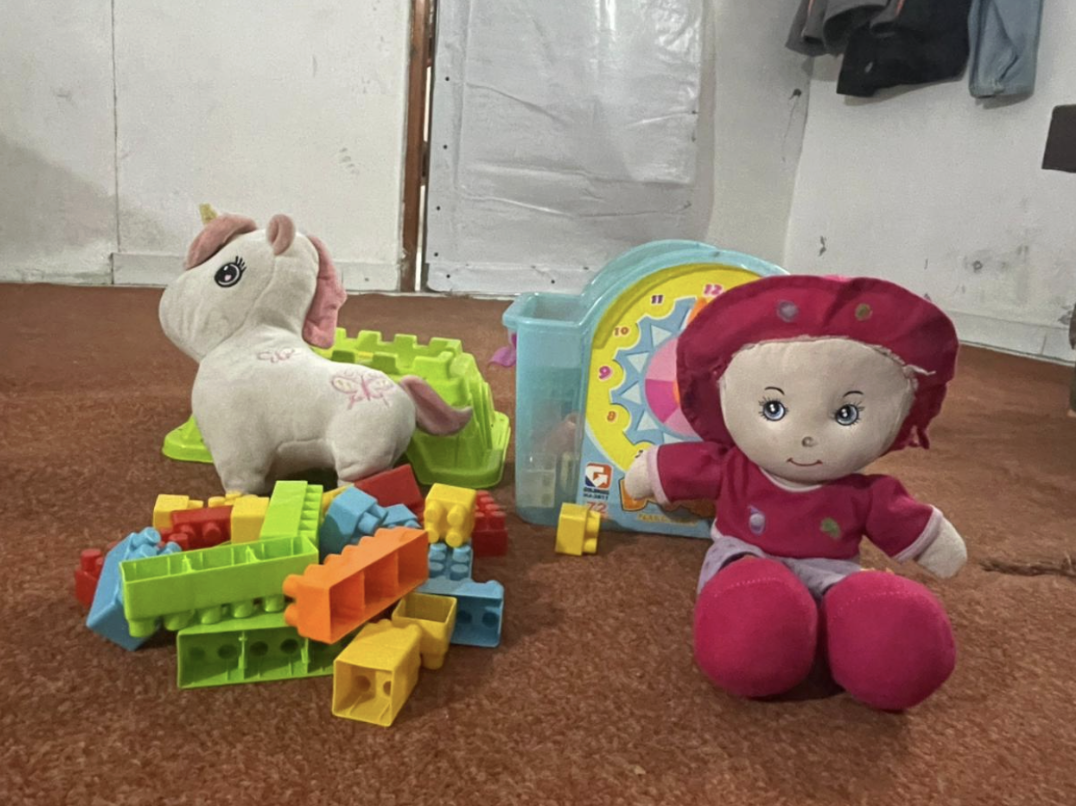
Children’s toys in Gaza – the few that can be found in the market – are too expensive for most families to afford. Photo by Khaled Al-Qershali
Malak’s parents did manage to buy her new clothes this year, but they could not afford any for her 13-year-old brother, Ismail. Transportation across Gaza has become scarce, making family visits difficult. “While we were displaced in Deir Al-Balah, only my uncle Sobhi managed to visit us,” she said. “I couldn’t visit my grandparents during Eid.
Her family tried to travel to Gaza City but could not find transportation, as hundreds of thousands of people were attempting to visit their relatives at the same time. On 24 March, after Eid had already passed, Malak finally visited her grandparents when her parents managed to secure transportation.
“While I was visiting my grandparents, my father wanted to give Eidiyah to my grandmother but he couldn’t,” Malak said. Her grandmother did not have a phone or a bank account, making bank transfers impossible. “My father tried to withdraw cash to give her the Eidiyah, but the commission exceeded 20%,” she said.
In the end, even this small tradition — once a symbol of affection and celebration — had become nearly impossible.
Hazem Abd Al-Kareem Areef, reported by Khaled Al-Qershali
Hazem Abd Al-Kareem Areef, 51, is a father of seven who worked as a tiler before the genocide. Areef spent the first Eid in displacement in Deir Al-Ballah. "Eid Al-Fitr in 2024 was the worst Eid in my life," he said. "Instead of waking up in my own home and preparing to welcome relatives, I woke up in a crowded shelter, surrounded by hundreds of displaced families.
Hazem could not afford to buy clothes or sweets for his children, and there were no visits between relatives. For Hazem, what hurt the most was seeing his children trying to celebrate despite the conditions. “They asked me about Eidiyah, but I had nothing to give them. As a father, that feeling was harder than hunger itself” Areef said.
Last Eid in 2025, Hazem was no longer living in displacement camps, but his home was bombed. He and his family were living in a small rented apartment in northern Gaza, where he had to pay around $300 a month in rent, a price far beyond what he could afford without steady work.
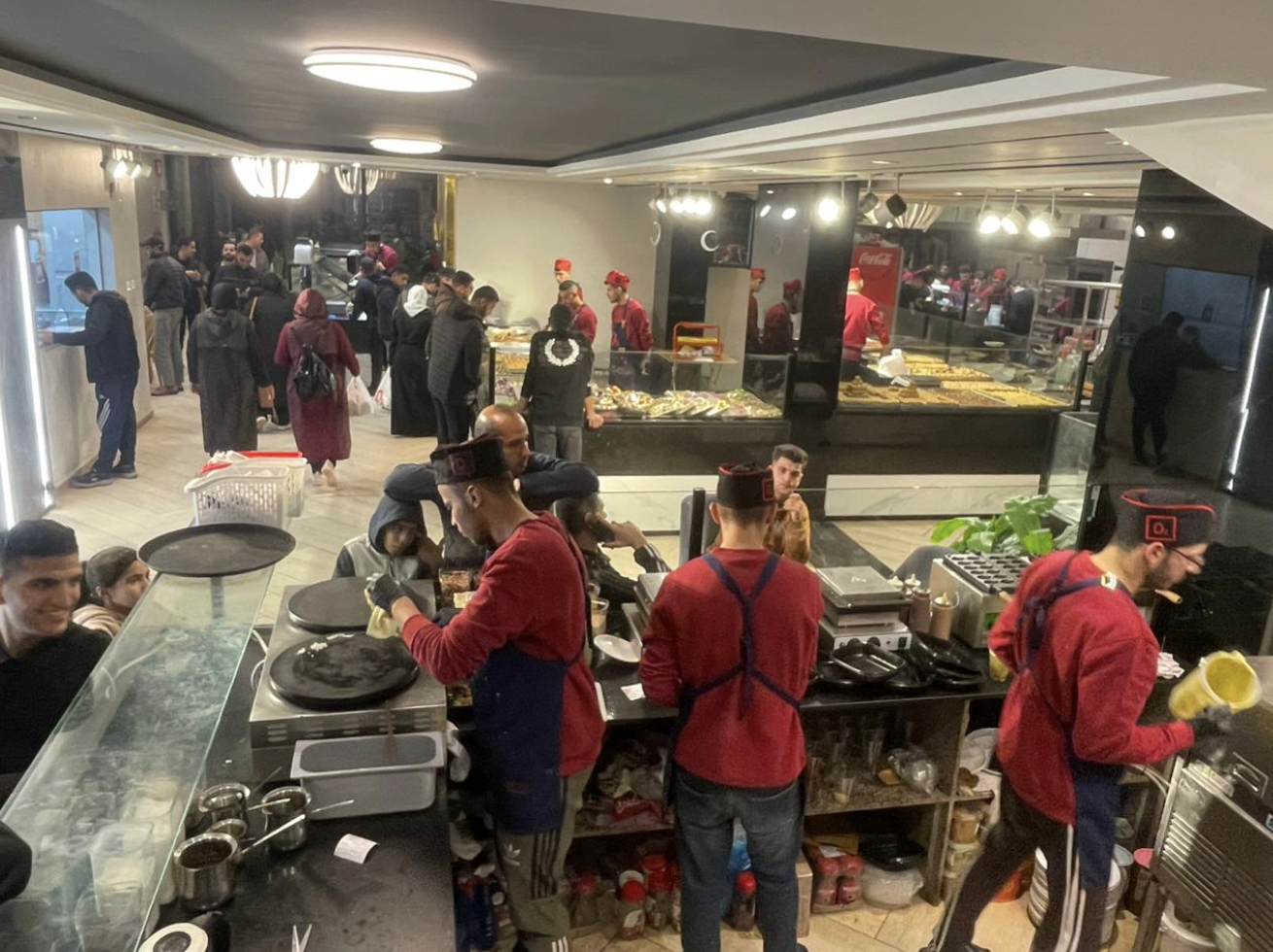
A restaurant in Al-Nasser Street serves its customers on Eid, March 2026. Photo by Khaled Al-Qershali
“Before the genocide, I owned my home and never imagined that one day I would struggle just to pay rent,” he said. “Every month I worry about how I will find the money to keep a roof over my children’s heads.” Despite the financial burden, Areef tried to maintain some sense of normalcy for his children during Eid. “I wanted them to feel that Eid had arrived, even if only in the smallest ways,” he said.
This year, Areef and his family had to move again. This time, from their rented apartment to his brother’s home in northern Gaza. Despite the crowded conditions, Areef still tried to preserve the small traditions that once made Eid meaningful for his children. “We were all living together in my brother’s house, trying to help each other survive. But even in those difficult conditions, I wanted my daughters to feel that Eid had arrived.”
Hazem planned to give Eidiyah to his daughters, as he used to do every year, but the ongoing cash crisis in Gaza made it nearly impossible. Instead, he chose a small alternative.
“I bought them some snacks and sweets from a nearby shop and told them this was their Eidiyah this year. It was not the same as before, but I wanted them to feel that their father had not forgotten the tradition.”
Hani Qarmoot
I came to the realization that I now gauge holy months by displacement rather than dates.
I experienced three Ramadans during the Israeli genocide. The first took place in Rafah. The second, and the most peaceful, was in our home in northern Gaza. The third in Al-Nuseirat, where we are once more displaced.
Ramadan is a month of reflection, but I didn't reflect much at the end of the month. I instead considered the next one: Where will I be displaced in Gaza? One thing I already know is that it won't be in our house. After being demolished, our home was converted into an Israeli military installation.
At night, the questions grew louder in my head. Next Ramadan, will I even be alive? Will my family be safe? Will my uncles, aunts, and I all get together around a single, long iftar table like we used to every Friday? Is that table now a part of a different, past life?
This Ramadan went by without the little things I used to cherish. Unlike before the war, I did not stay up late for suhoor. There was no internet, no electricity, no television, and no shows. The month seemed more like something we were attempting to get through than a time for introspection.
This year, we didn't even have the mixed fruit platter that we used to have after iftar. Many fruits were unavailable due to Israel’s blockade on Gaza, and those that were found were extremely costly. Although it was a simple tradition, it was an essential part of our Ramadan. The table felt different without it.
Then came Eid.
We had hoped it would happen when things were better for us. It didn't. Nevertheless, we made an effort to make the most of what we had. This year, there was no Eidiyah. The children, who used to wait for Eid to get money from their family, were the ones I missed the most. It wasn't a lot of money, but we loved this tradition.
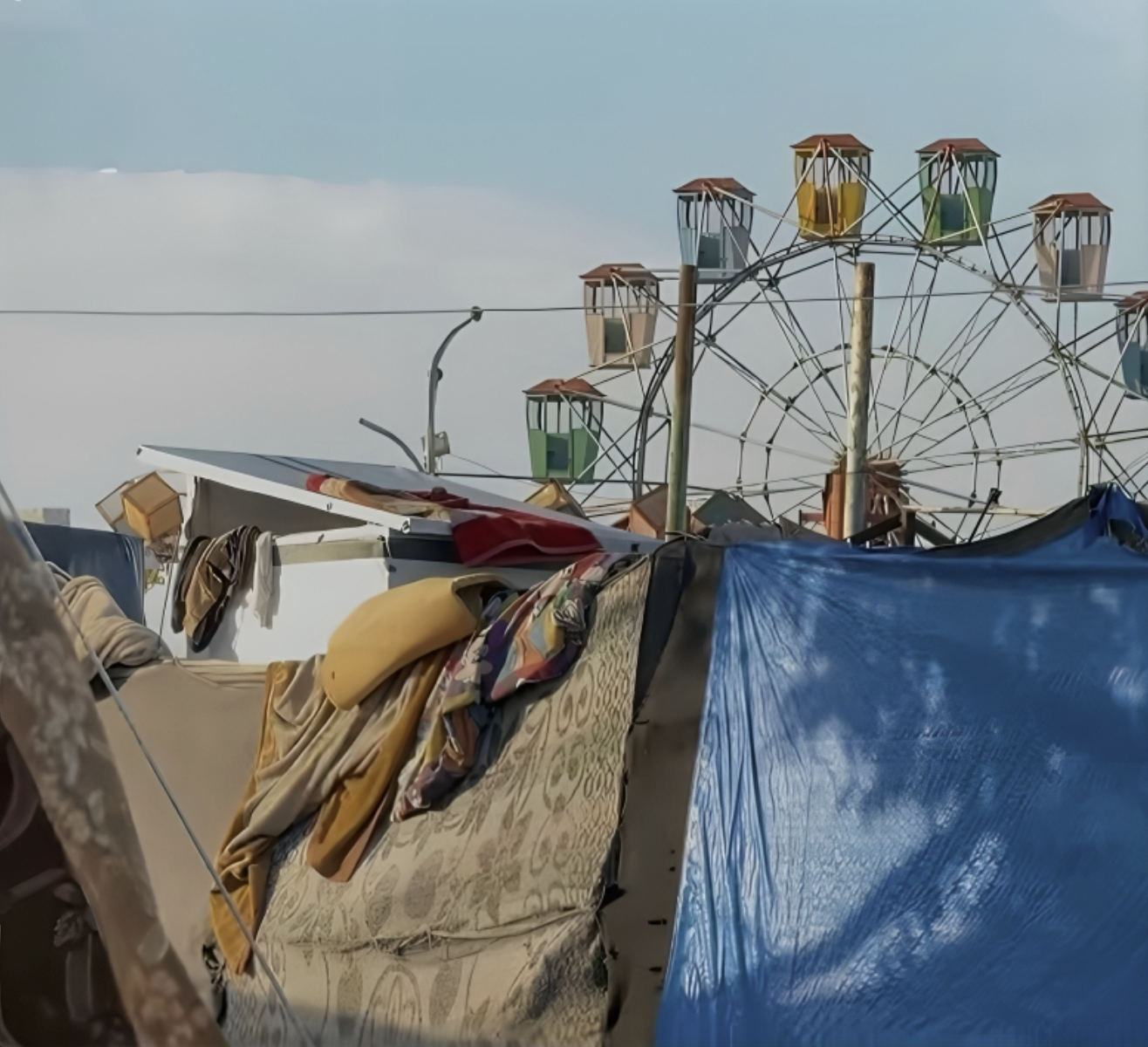
Asdaa amusement park in southern Gaza after it was turned into a displacement camp. March, 2026. Photo by Hani Qarmoot
We also lost the places that shaped our celebrations. Once brimming with lights and kids laughing, the Asdaa Amusement Park is now a refuge due to its destruction. Al-Nour Resort in what used to be Netzarim has been completely erased by Israeli bombs. So was the "Nama'a" Zoo, which kids used to visit on Eid. They took photos, fed the animals, and watched them. It was a little space, but for a few hours it allowed kids to feel normal. That, along with so much more, has vanished.
Our Eid started at Al-Bashir Mosque in Tel Al Zaatar north of Jabalia prior to the genocide. After being bombed in 2014, it was repaired, but in October 2023, it was destroyed once more. Before the Eid prayer, children, women, elders, and young men gathered to decorate the mosque courtyard.
Following the prayer, our extended family would charter a 50-seat transit bus and spend a long day visiting relatives throughout Gaza, traveling from Beit Hanoun in the north to Rafah in the south. We would take our yearly Eid picture by the sea at Gaza's seaport to round off the day.
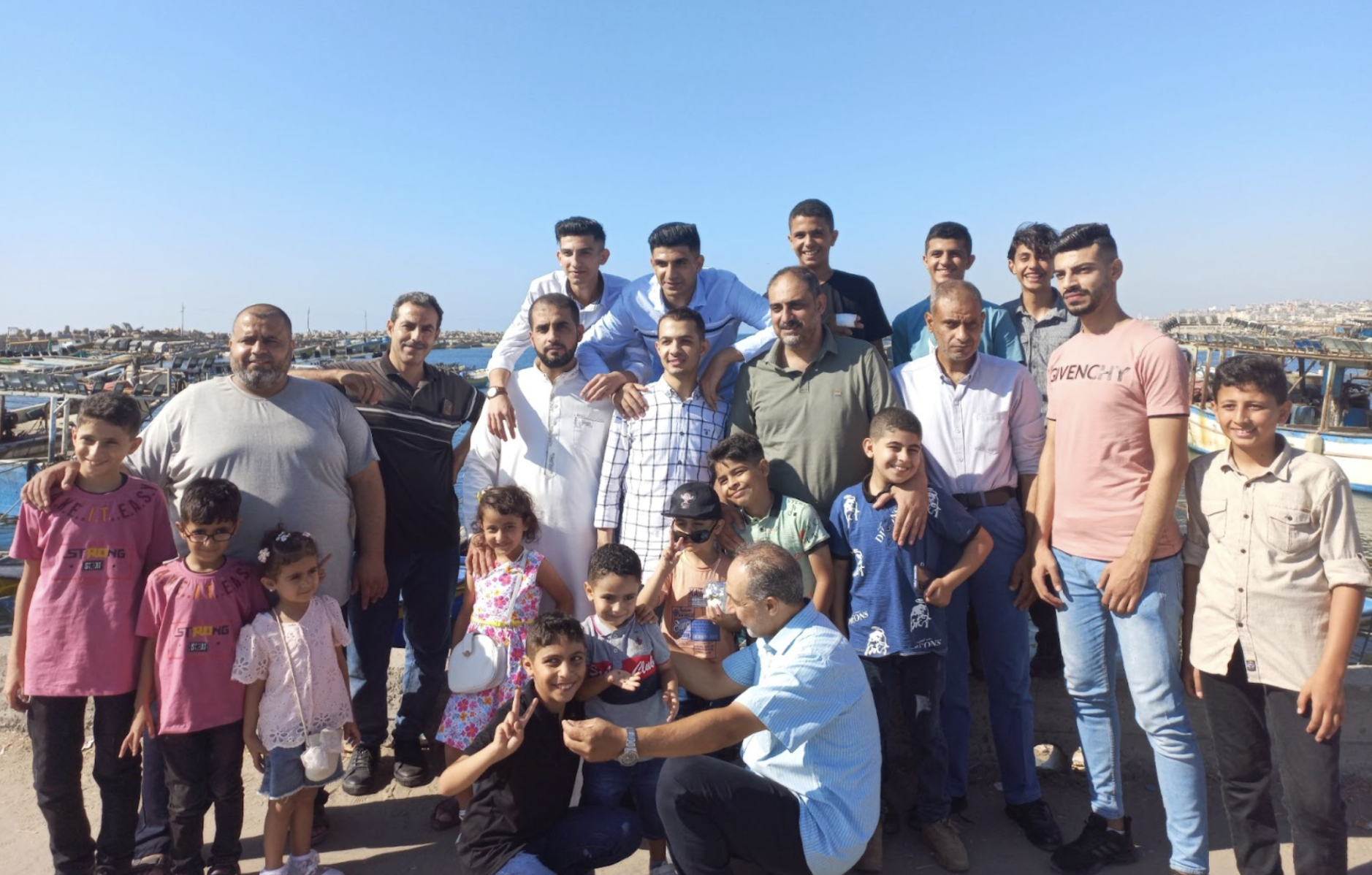
The author’s family on Eid, March 2023. Photo courtesy of Hani Qarmoot.
But now traveling has become challenging. If transportation is accessible at all, a trip that used to take fifteen minutes can now take up to an hour.
My mother baked cookies and maamoul. My father did something he only does on Eid: he bought peanuts the day before, and we ate them the same day. Fortunately, they were available this year. Lin, my sister, bought a new Eid outfit and matched it with an olive-colored headband and hair bow. We all sat around the table, laughing and competing to see who could eat the most. Of course, the traditional fesikh was present, with its strong aroma as familiar as it is on Eid.
Despite its higher price this year, it still made its way onto our table.
Even in the midst of loss, destroyed homes, vanished parks, and traditions we can no longer fully practice, we discovered moments of joy. Baking cookies, competing for peanuts, seeing my sister in her new outfit, and sharing familiar flavors reminded us that we were still alive. Sometimes just being together, laughing, and celebrating in small ways is enough.
It may not be the Eid we remember, but it is ours nonetheless.
Subscribe to the Palestine Nexus Newsletter: