
How dabke is the art of resilience in Gaza
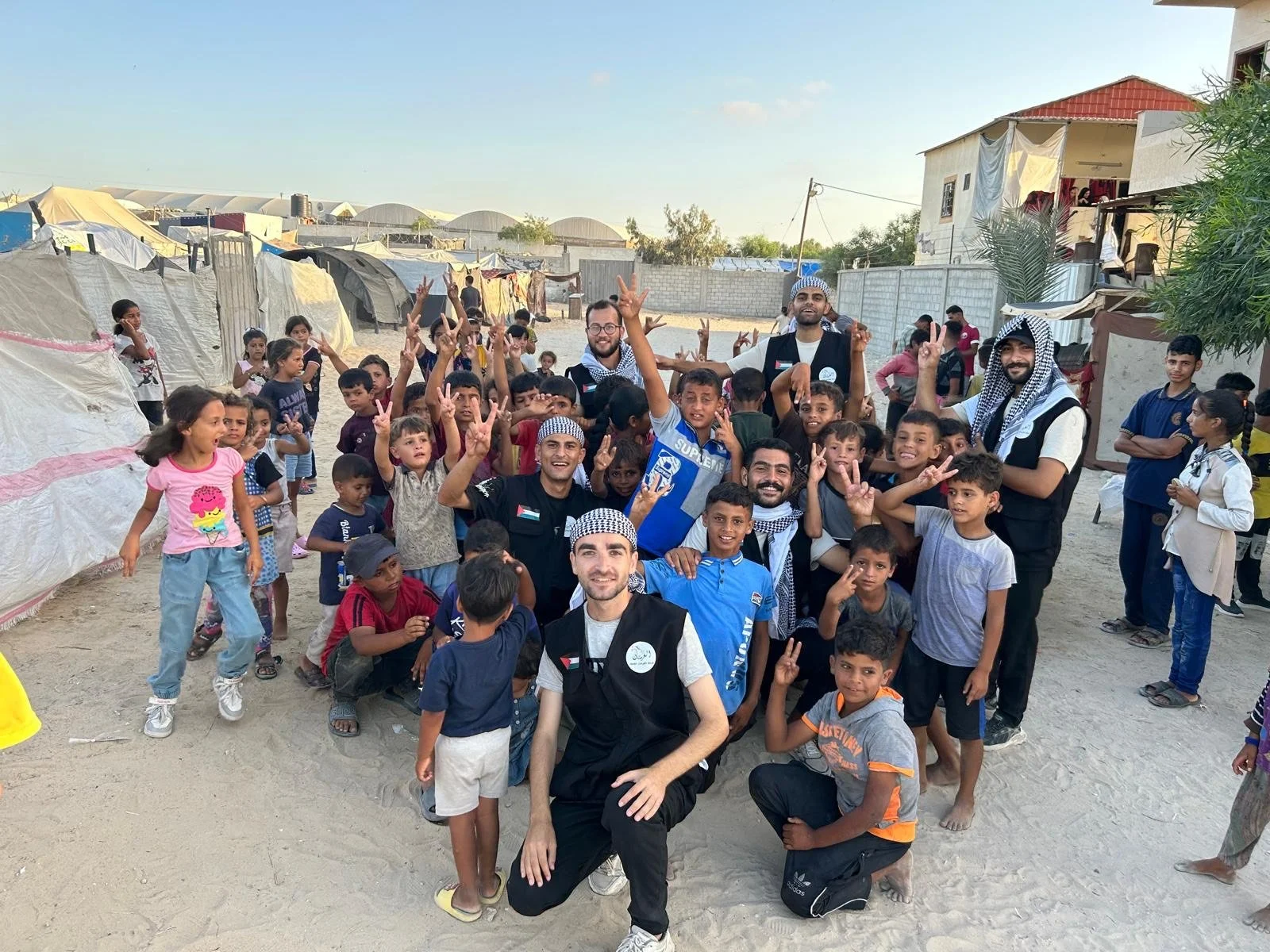
In October 2024, this photo was taken at the Palestine Red Crescent camp in Khan Younis, where the Al-Fursan Popular Dance Troupe trained young dancers who performed at local and international festivals, celebrating Palestinian heritage through dabke.
April 3, 2026 — On June 30, 2025, Bashar Al-Belbisy came to Cafe Al-Baqa on the Gaza beachfront to hang out with his friends Mohamed Naeem and Mohamed Abu Shalha. The cafe is one of the few popular spots in Gaza overlooking the sea and a refuge for families, students, and journalists to gather and momentarily escape the daily realities of Israel’s ongoing genocide.
As soon as they arrived, Al-Belbisy noticed Israeli warships positioned dangerously close to the shore. He turned to his friend, "What if these ships fired? What would happen?"
He didn’t hear the answer. Moments later, a missile struck.
It was a bloodbath. It came to be known as the Al-Baqah rest stop massacre that killed over 74 people, wounding dozens more, including women and children.
Al-Belbisy was a pharmacist and the director of the Al-Fursan Popular Arts Troupe, a youth-led collective he co-founded in 2016 that trains children and young people across Gaza in dabke, and uses dance as a form of cultural expression and psychosocial support.
“In a place shaped by blockades, repeated wars, and constant trauma, I believed dabke could give children and young people psychological support and help keep our Palestinian heritage alive,” Al-Belbisy told Palestine Nexus.
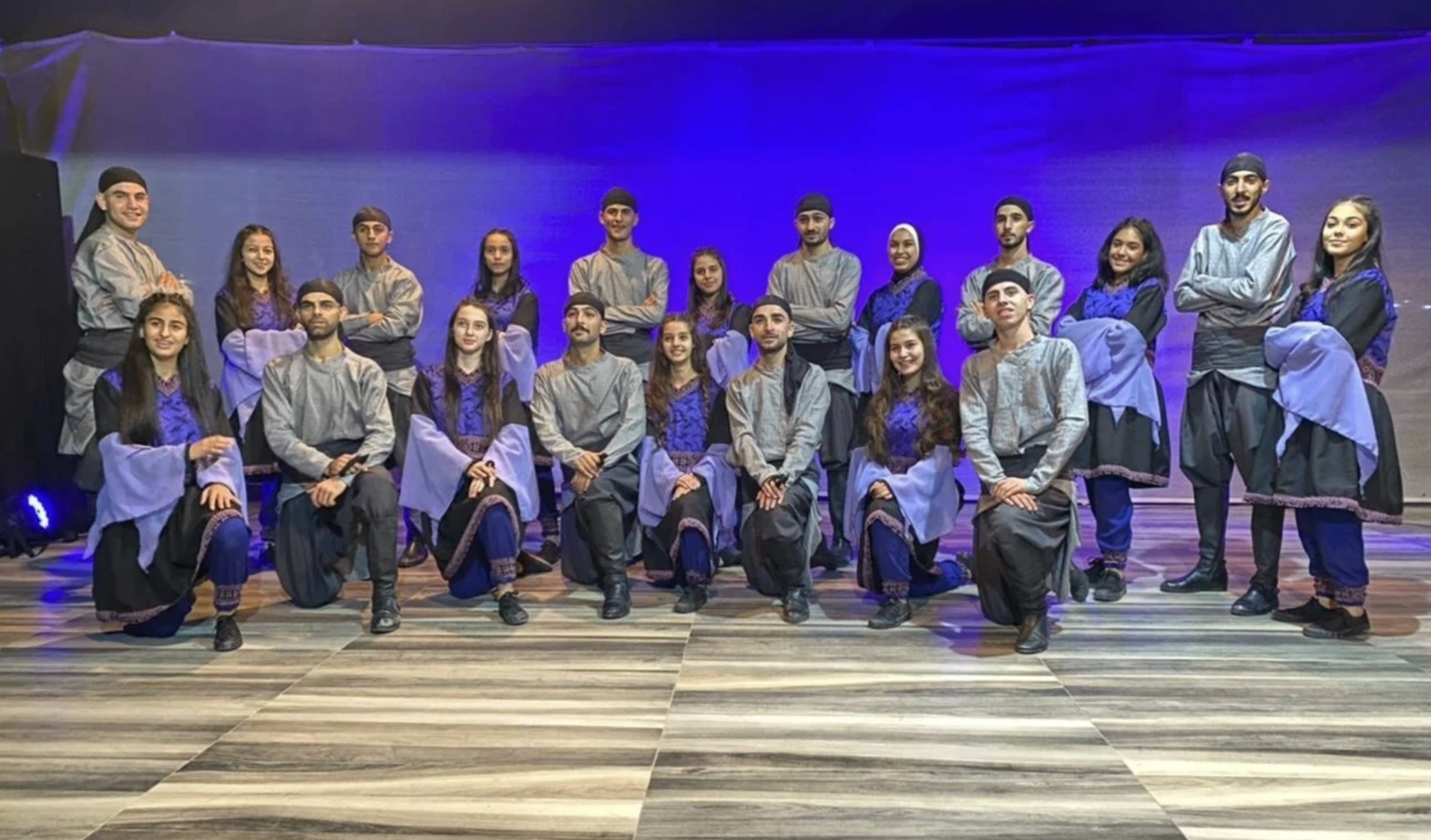
In March 2024, at the Red Carpet Festival in Gaza, Al-Fursan Popular Dance Troupe took the stage with powerful steps and vibrant energy, celebrating Palestinian heritage through dabke.
Al-Belbisy, 26, was born in Gaza City and grew up during the Second Intifada and the prolonged blockade imposed on the Strip. From a young age, he was accustomed to frequent electricity and water outages, and to the sounds of airplanes and military activity.
“I learned that even in the hardest moments, we have to find our own way, whether through art, helping others, or simply holding on to hope,” Al-Belbisy said.
At 16, his passion for folk arts began to take shape. He would stand for hours listening to music and observing dabke steps at weddings and celebrations, trying to mimic the movements. “Dabke was never just a dance for me,” Al-Belbisy said. “It was a way to connect with my roots and culture, to express joy, and to create a sense of belonging for a community living amid hardship.”
Ten years ago, at just 16 years old, he and a group of about 10 university students founded the Al-Fursan Popular Arts Troupe. They focused on learning and practicing the basics of dabke, organizing small performances, and creating a safe space for youth in Gaza. “The troupe was never just about dancing or performing,” Al-Belbisy said. “It was a social and cultural space where young people came together to preserve our Palestinian heritage and tell the stories of our community through art.”
Over the years, the troupe grew to about 50 young boys and girls who participated in numerous local as well as international festivals. They trained in a theater in Tel al-Hawa across from Al-Quds Hospital that was destroyed last February.
Al-Belbisy believes his artistic journey was complemented by pharmaceutical practice. He studied pharmacy at Al-Azhar University. During his university years, his days were divided between working in the pharmacy and teaching dabke to children and youth. “For me, medicine and art are not separate. Both are ways to serve people—one heals the body, the other heals the soul.”
Al-Belbisy has also produced and directed short feature films and documentaries like "Trying to Survive" and "Taweetha" that chronicled the lives of young people in Gaza during the genocide. The films were part of the "From Ground Zero" series, which was shortlisted for the 2025 Academy Awards.
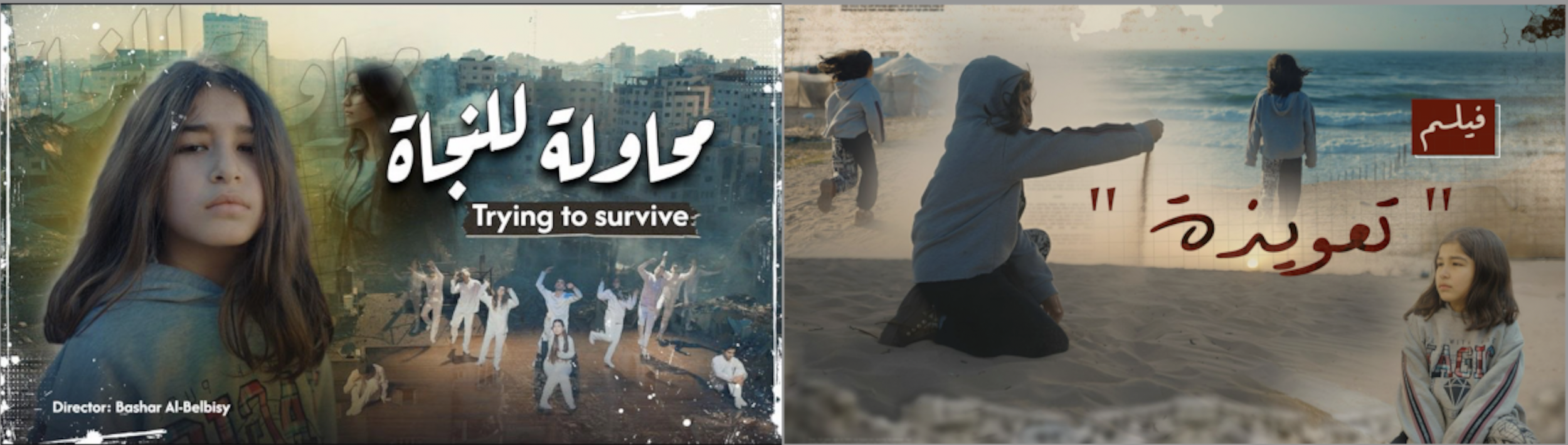
Posters of ‘Trying to Survive’. Photos provided to the author.
“What started as teaching dabke to children in shelters became a way for me to tell the story of Gaza to the world,” he said. “I never imagined that our work would reach international audiences and even be recognized by the Academy Awards.”
Al-Belbisy also led an international tour of his film "Yalla Gaza" in France, screening it in 12 cities. This provided him with the opportunity to connect with French artists, which would help establish the Friends of the Knights Association in France to support the exchange of artistic and cultural experiences between Gaza and the world.
But life after October 7, 2023 was no longer the same. Like millions of Gazans, Al-Belbisy and his family were displaced multiple times. Al-Belbisy was in his final year at university and was supposed to graduate in October, but that was not to be.
He initially volunteered as a pharmacist at a medical point in Rafah for three weeks in November 2023, providing aid despite severe shortages of medicines and supplies. These medical points were temporary setups established in areas where displaced people gathered to offer basic healthcare services.
As an artist, he worked with his team in numerous shelters across Gaza, teaching children dabke and keeping cultural activities alive. His troupe included approximately seven children’s groups in Mawasi at the Red Crescent camp in Khan Younis – where Al-Belbisy was displaced with his family.
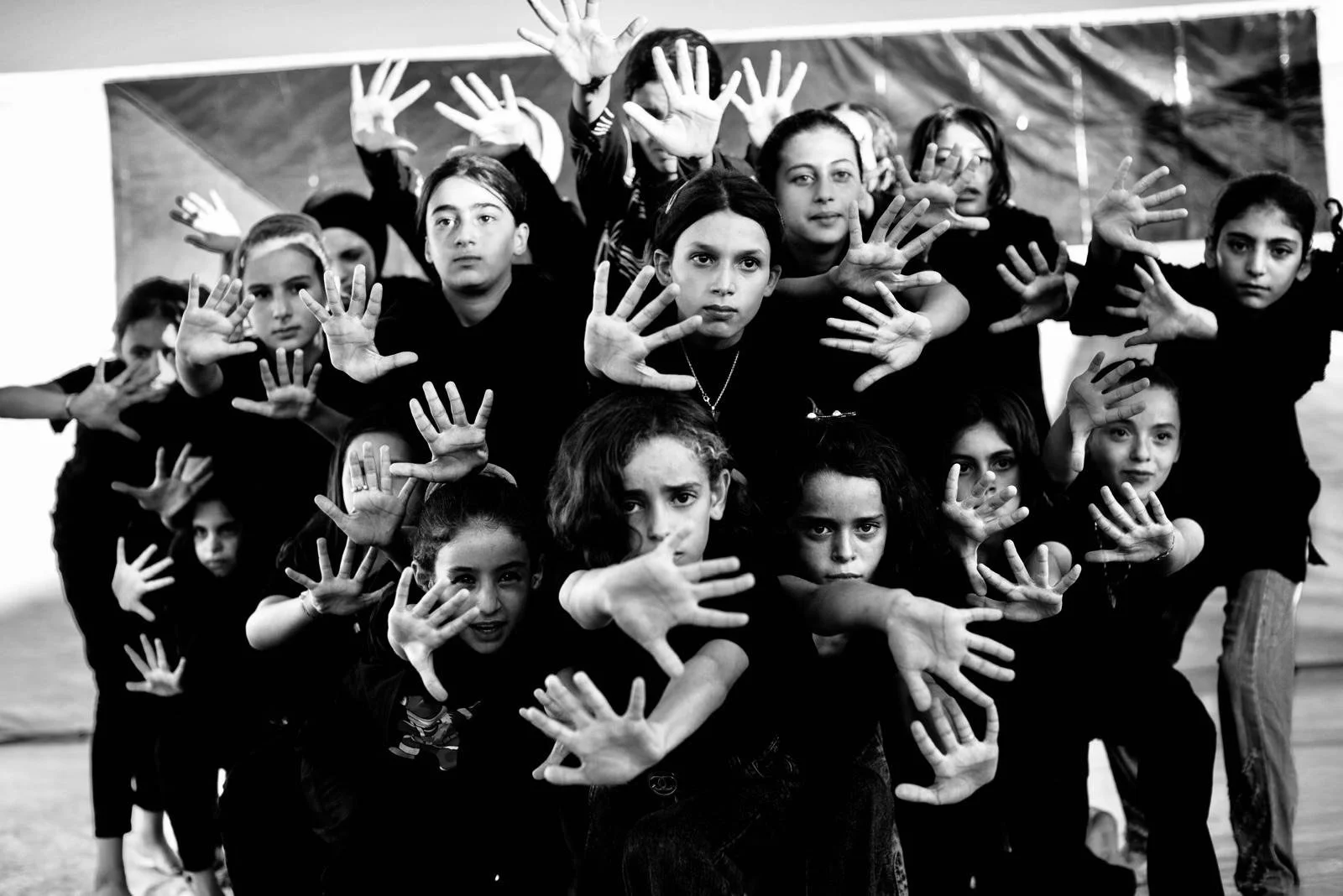
In November 2023, at Al-Amal Camp in Khan Younis, Al-Fursan Popular Dance Troupe brought moments of hope and resilience, as their dabke echoed strength and unity amid difficult times.
“Even when the bombs were falling, I had to keep the music and dance alive for the children,” he said. He would gather kids in shelters, schoolyards converted into temporary safe spaces, or even between tents, and teach them dabke. “For them, even a few steps and a laugh were like reclaiming life,” he said. His troupe is still active, though their activities have become intermittent due to injuries sustained by multiple members during the conflict.
“We couldn’t stop the war, but we could dance through it, even for a few minutes.”
But, the massacre at the Cafe Al-Baqa changed that, too.
After the massacre, Al-Belbisy saw his injuries — his foot was almost completely separated, with no clear structure of bone, flesh, or skin holding it together.
“In that moment, I thought it was over — I was sure my foot would be amputated,” Al-Belbisy recalled. “I just kept holding it [his foot] together, trying to convince myself there was still a chance.”
In Al-Shifa Hospital, he braced himself for the possibility of amputation. When a light breeze moved the curtain and touched his injured foot, he felt it. It gave him hope that his foot might be saved.
Al-Belbisy stayed in the hospital for a month, where he underwent surgery. However, despite doctors’ efforts against all odds in Gaza’s decimated health system, his injury required treatment that was simply not available. He was told he would have to travel abroad for treatment, or risk losing his leg.
And so Al-Belbisy left Gaza alone for France on July 13 through medical evacuation organized by the French consulate. As he departed, Al-Belbisy said he felt a mix of anxiety, fear, and sorrow at leaving his homeland and family, but he knew that this journey was his only chance to save his foot.
He underwent multiple examinations and procedures at a hospital in Rennes. Doctors succeeded in saving his foot from amputation. “Hope is still alive to reclaim my dream and continue my mission,” he said, optimistic that he can dance again.
Today, Al-Belbisy resides in France with his father and brother, continuing his rehabilitation and learning to walk, one step at a time. He is currently working with the French Ministry of Foreign Affairs to reunite with the rest of his family who are in Gaza.
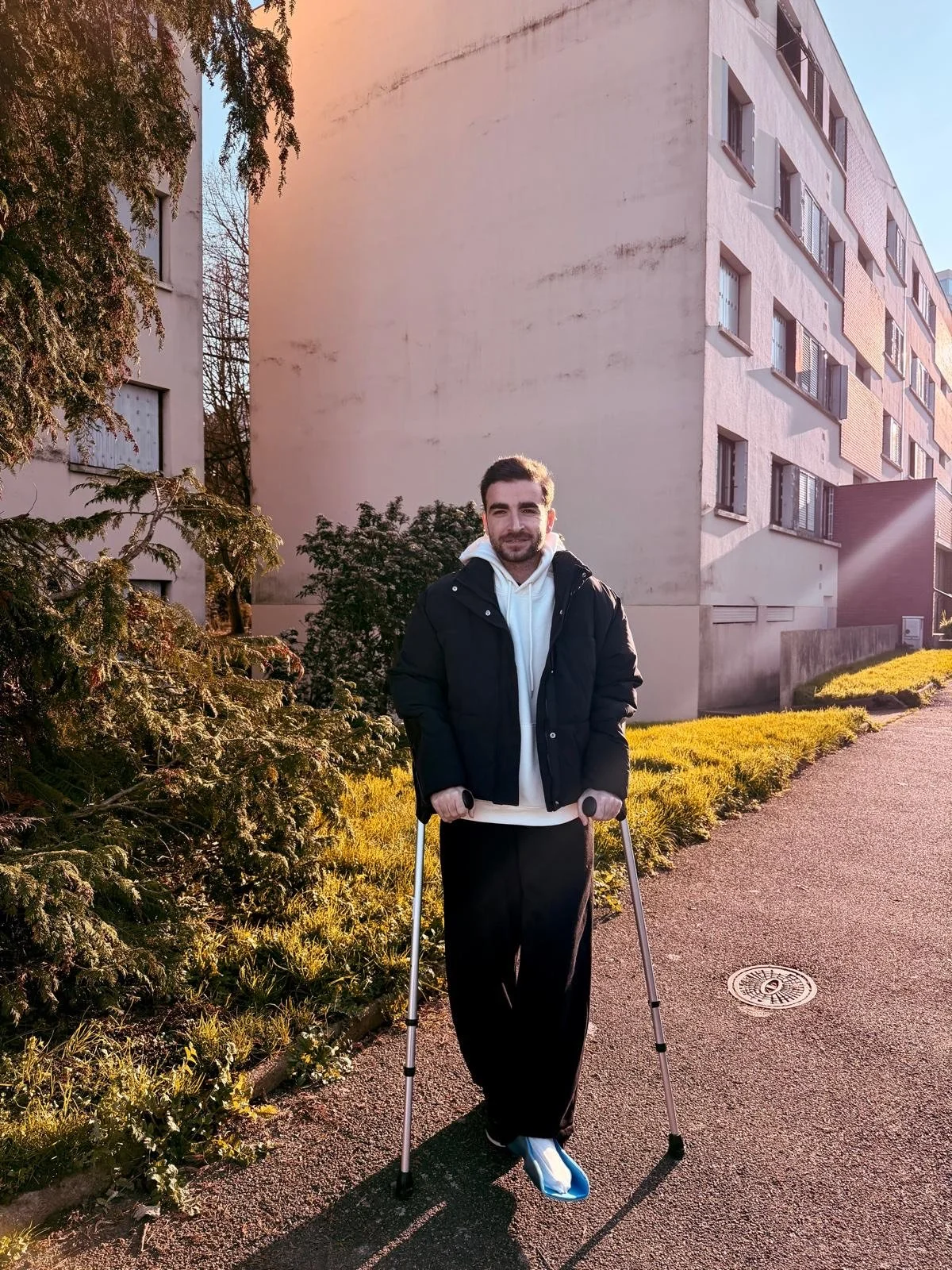
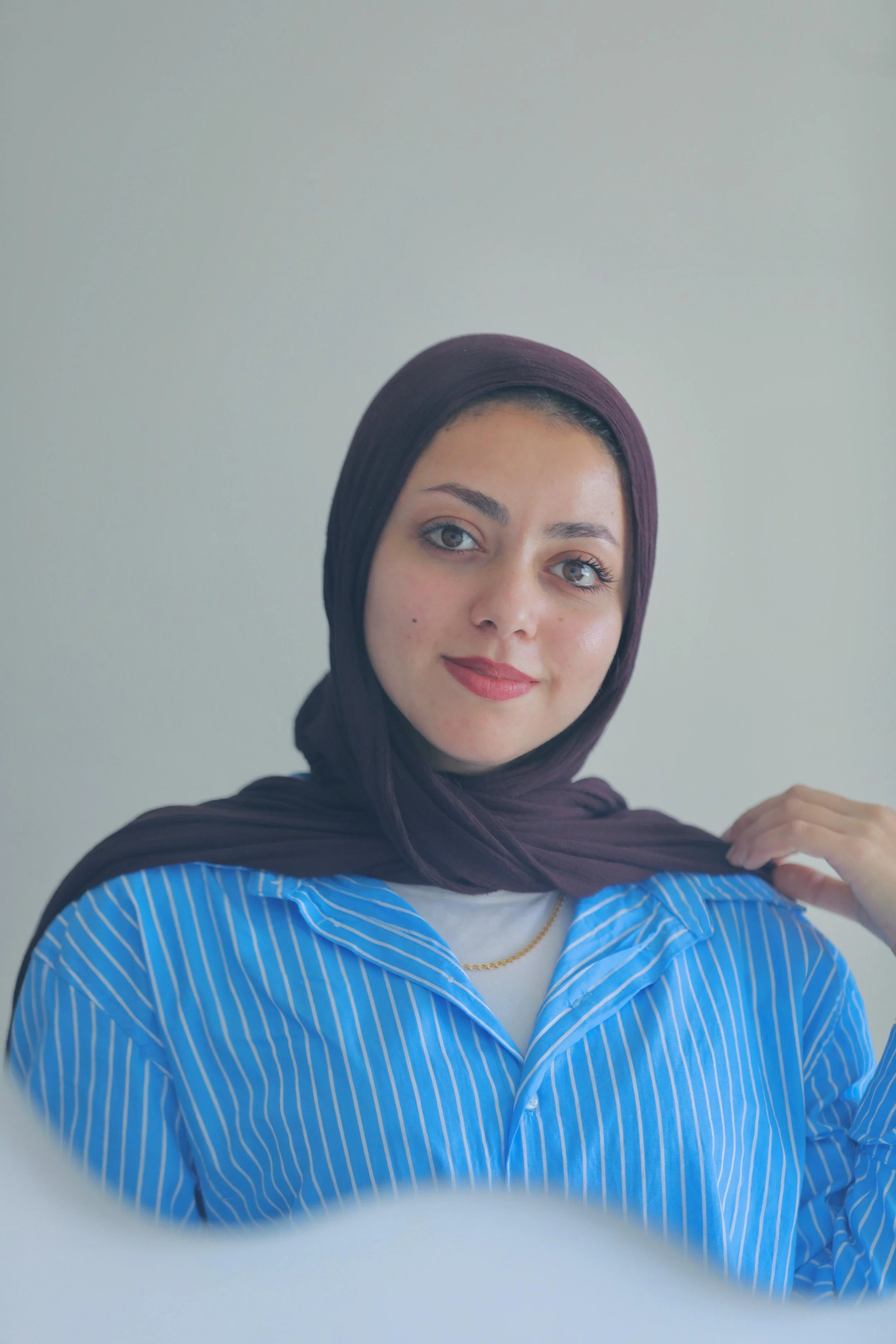
In December 2025, this photo was taken of Bashar Al-Belbisy in Rennes, France, during his journey for medical treatment—a moment that reflects both resilience and hope beyond the pain.
Between physical therapy sessions and his new life in a new country, he often reflects on dabke. Despite the distance, he continues to manage the troupe in Gaza, organizing roles and planning activities.
“Even far from Gaza, I continue to carry the same mission — to use art to support others and keep our identity alive.”
Subscribe to the Palestine Nexus Newsletter: