

Gaza’s Women Behind the Tents
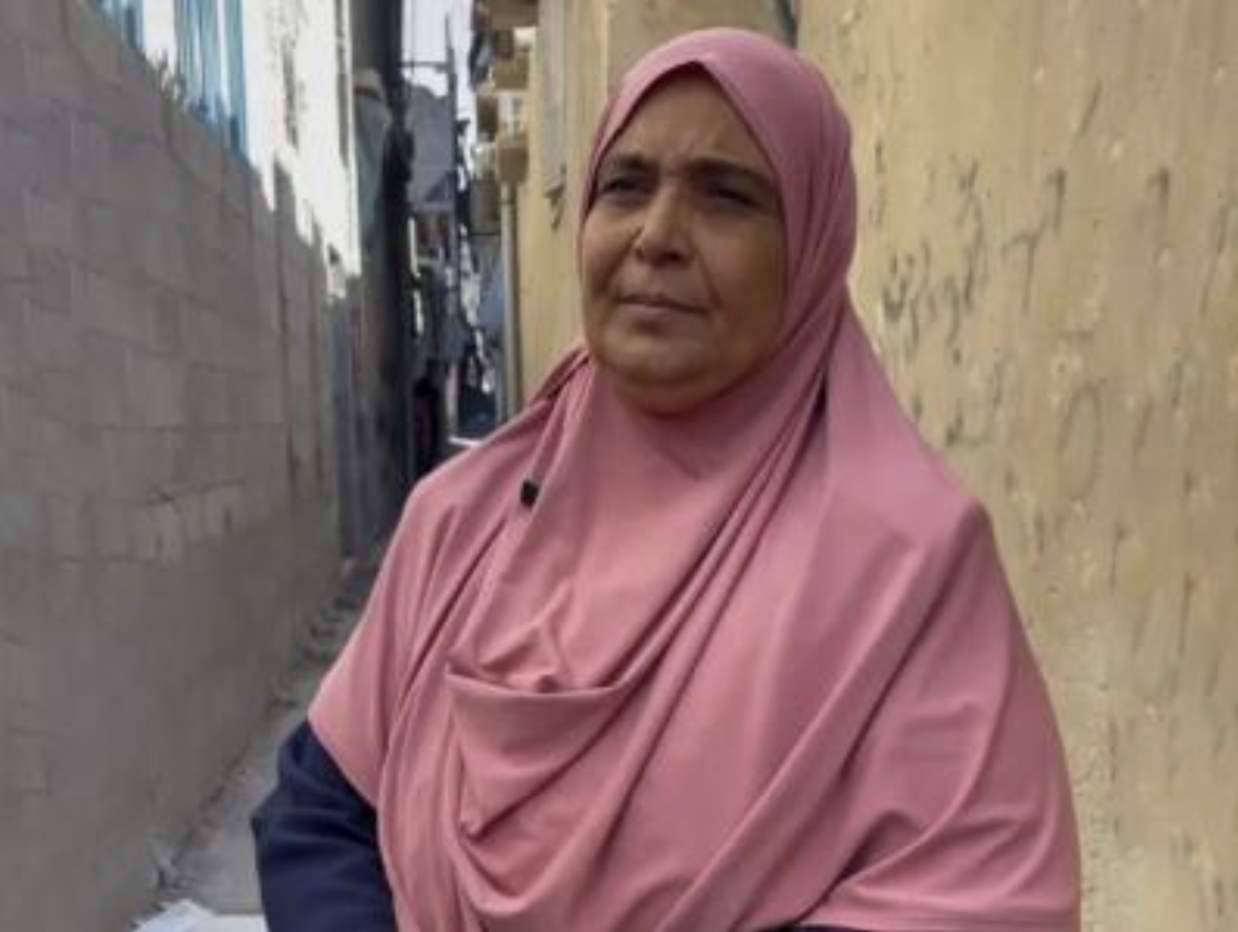
Manal Ali Hussein Baroud lost many family members to the genocide. At 56, she is now responsible for the survival of her daughters-in-law and her grandkids. Photo by the author
I do not report on war from a distance, I live it every day. I wake up in a small tent in Al-Zawaida, fetching water, preparing food, and trying to protect my family from dangers that never fully disappear. Survival here demands something from everyone, but it asks more from women’s bodies — more labor, time and endurance.
On the morning of January 12, 2026, in the camp in Al-Zawaida, after relentless rain had flooded tents, I watched mothers lift soaked mattresses, calm frightened children, and continue their daily routine, as if exhaustion was a luxury they could not afford. The stories of women in the camps are not only about loss, but about the invisible labor of holding life together amidst the destruction.
“My heart is full of grief”
Manal Ali Hussein Baroud, 56, lives in a small tent in Al-Zawaida. Like so many mothers, Baroud lost many family members to the genocide.
Her eldest son, Malik, was killed in November 2023 while standing in line to collect water. A month later, while fleeing from northern Gaza to the Al-Nasr area, with her daughter, three sons, their wives, and her two grandchildren, aged 2 and 3, she received a call from a relative. Her husband, who had been a little behind them during the journey and was supposed to join them, was killed along the way.
“I was walking, thinking only about how to keep my children and grandchildren safe from the shelling… I didn’t know I was saying goodbye to my husband while we were fleeing,” she told Palestine Nexus.
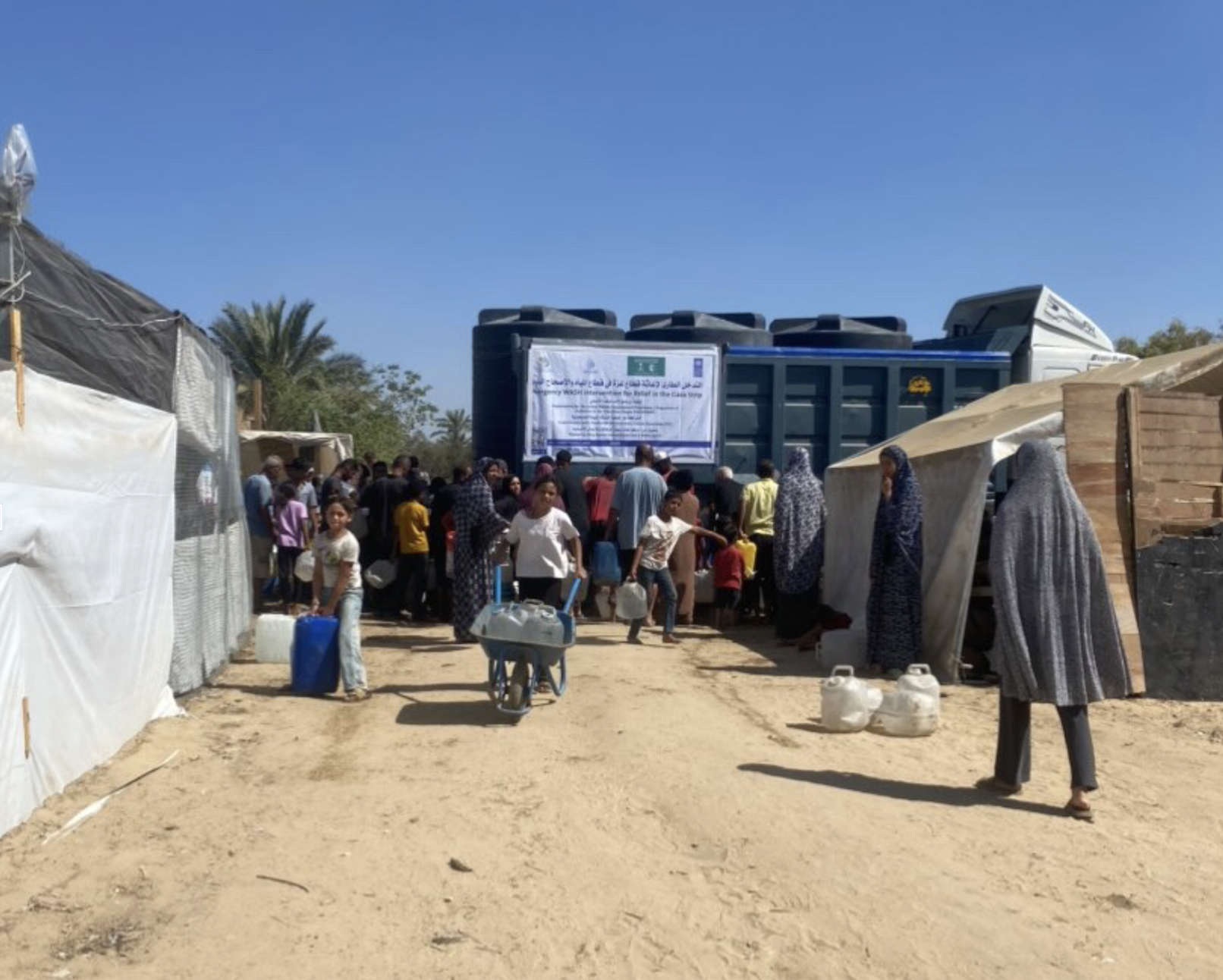
Women and children collecting water in Al-Zawaida camp, Gaza, January 2026. Photo by the author.
A few months later, in February 2024, one of her younger sons, Mohammed, was killed while working as a paramedic in Tel al-Zaatar, northern Gaza. The ambulance he was in, carrying injured people, was bombed by the Israeli military. Everyone in the ambulance was killed. Her other two sons, Ahmed and Moamen, were killed when the mosque they were praying in was bombed in July 2024.
Then, in February 2025, her 30-year-old daughter Haneen, who had always helped her care for the grandchildren, was killed along with her husband, Ahmed, when a school in the Al-Daraj neighborhood where they were sheltering was bombed.
“Every day is a struggle, but I have no choice—I have to care for my grandchildren while dealing with the loss of my sons and my husband,” she said.
Now, Um Malik, as she is known in the community, is the head of the family, and is responsible for providing food and meeting the basic needs of the family. She cares for her two grandchildren, now aged 3 and 5, and is the only support for her daughters-in-law.
Every morning, she prepares meals, collects water, cleans the tent, takes care of the toddlers and preschoolers, and figures out how to provide food, firewood, and clothing. With no stable source of income, she relies on sporadic aid from relatives and the World Food Programme, collecting food rations after standing in long queues, as well as occasional small financial help from relatives, to meet her family’s basic needs — all while dealing with chronic joint pain and constant fatigue.
“Every day is hard… I wake up, fetch water, cook, play with the children, and by the end of it all, I feel exhausted—but there is no choice…” she said.
“My heart is full of grief, but the children need me.”
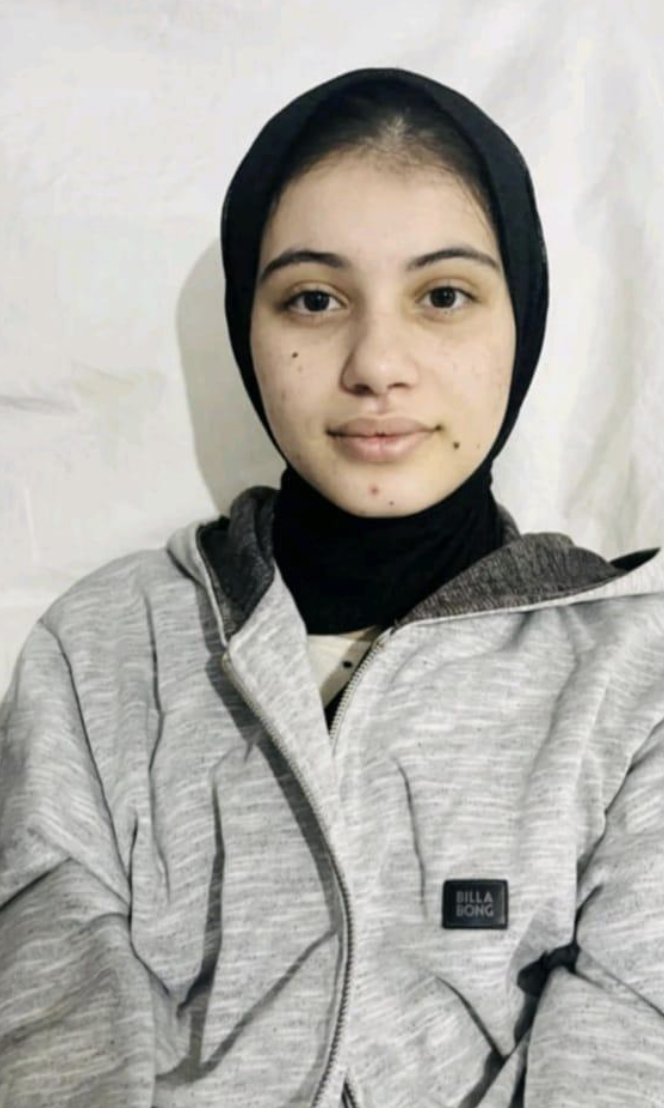
Sarah Salman, Deir al-Balah, Gaza, December 2025. Photo provided to the author.
“I just want to feel normal again”
On 4 December 2023, several shells hit Sarah Kamal Salman’s home in northern Gaza. The attack injured or killed all of her family members; her mother and brothers later traveled to Egypt for treatment, while another brother was killed. Sarah, 18, stayed behind in Gaza with her father and her 15-year-old sister.
“As a father, it breaks my heart to see my daughter suffer like this and not be able to walk,” said her father, Kamal Salman. “My only hope is that she will be able to travel, receive the surgery she needs, walk on her own again, and live like any other girl her age.”
Before the attack, Salman was a top-performing high school student, always achieving excellent grades.
“Before my injury, I used to go to school every day, meet my friends, and help with projects and homework,” Salman said. “Now, I can’t go out or see them. I feel isolated and frustrated, and I miss the life I had before.”
She was unable to attend school after her injury, which affected her performance; her grades dropped significantly. She had planned to study computer engineering at Al-Azhar University, but her injury forced her to postpone her studies until she can undergo surgery, and regain mobility. The injury left her unable to walk, and although she received treatment at the UK Field Hospital (UK-med) for a year, she neither had access to proper care living in a tent nor the necessary medication.
Salman lives in a small tent in Deir al-Balah, where space is tight and facilities are minimal. Confined to a manual wheelchair, she depends on her 15-year-old sister, Rahaf, for most daily activities, from reaching the bathroom to dressing and eating. “I dream of walking again, going to university, seeing my friends, and being able to take care of myself without relying on my sister for everything,” she added. “I just want to feel normal again, to live my life like any girl my age.”
Salman is currently awaiting medical evacuation to undergo surgery that could allow her to walk again.
“I’m scared about giving birth”
“I feel completely alone,” a 32-year-old woman, who has asked to remain anonymous, said from her tent in the Al-Zawaida area. She lives with her 6-month-old and her 62-year-old mother, who suffers from malnutrition and stomach infection and is dependent on her for daily care.
Her husband was killed three months ago in Deir al-Balah while going out to buy supplies for their infant. A shell hit their house, and shrapnel struck him, killing him instantly. She is now seven months pregnant with her second child, facing life alone while shouldering full responsibility for her nine-month-old infant and her elderly mother.
“Losing my husband while I’m pregnant has filled me with fear and sadness,” she said. “When my baby moves inside me, the first thing I think about is how it will come into this world, whether I will be able to provide milk and keep it healthy, and whether its life will be better than mine in these harsh conditions,” she added.”
Every day, she works beyond her limits: fetching water from long distances, hand-washing clothes, cooking over a wood fire that often makes her nauseous, and caring for her child and mother.
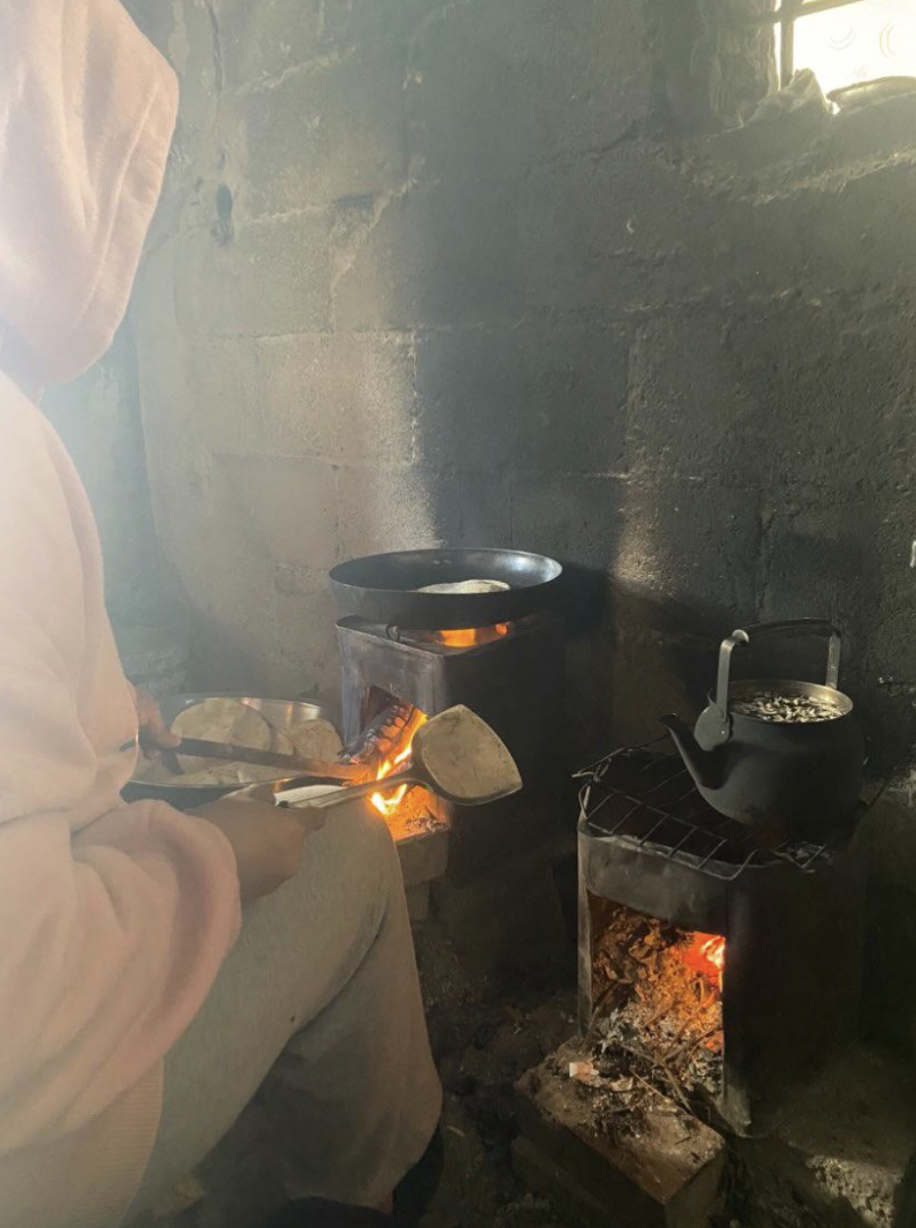
The 32-year-old woman, who requested anonymity for privacy reasons, is seen cooking over an open fire in her tent in Al-Zawaida camp, Gaza. January 2026. Photo by the author.
“I wake up before sunrise and I don’t stop until night,” she said. “There’s no clean water, and the toilets are dirty and unsafe. There’s no privacy when I bathe or sleep, and I feel exhausted all the time. But I have no choice—I have to keep going for them.”
She has endured multiple displacements, carrying her child and belongings across long distances under harsh conditions, which increases both her physical and mental exhaustion. Poor nutrition and constant fatigue have left her weaker, making daily tasks even harder.
“I’m scared about giving birth,” she said. “The hospital is far, and there are very few doctors. I worry I won’t get help in time if something goes wrong, and I’m even more afraid for my baby because we don’t have all the vaccines and proper care. How will I manage everything alone—with a sick mother depending on me and no one else to help?”
Health, Hygiene, and Privacy Challenges for Women in Gaza
I spoke with several women living in the tents of Deir al-Balah in central Gaza, who requested anonymity to protect their privacy and safety. The women described harsh living conditions, including unhygienic and inadequate sanitary facilities. According to a recent United Nations humanitarian update, overcrowded shelters with limited access to clean water and poor sanitation have contributed to increased water‑borne and other illnesses in displacement sites across Gaza. They also explained that lack of privacy and overcrowding—sometimes with strangers living just a few steps away in neighboring tents—adds further strain to everyday life.
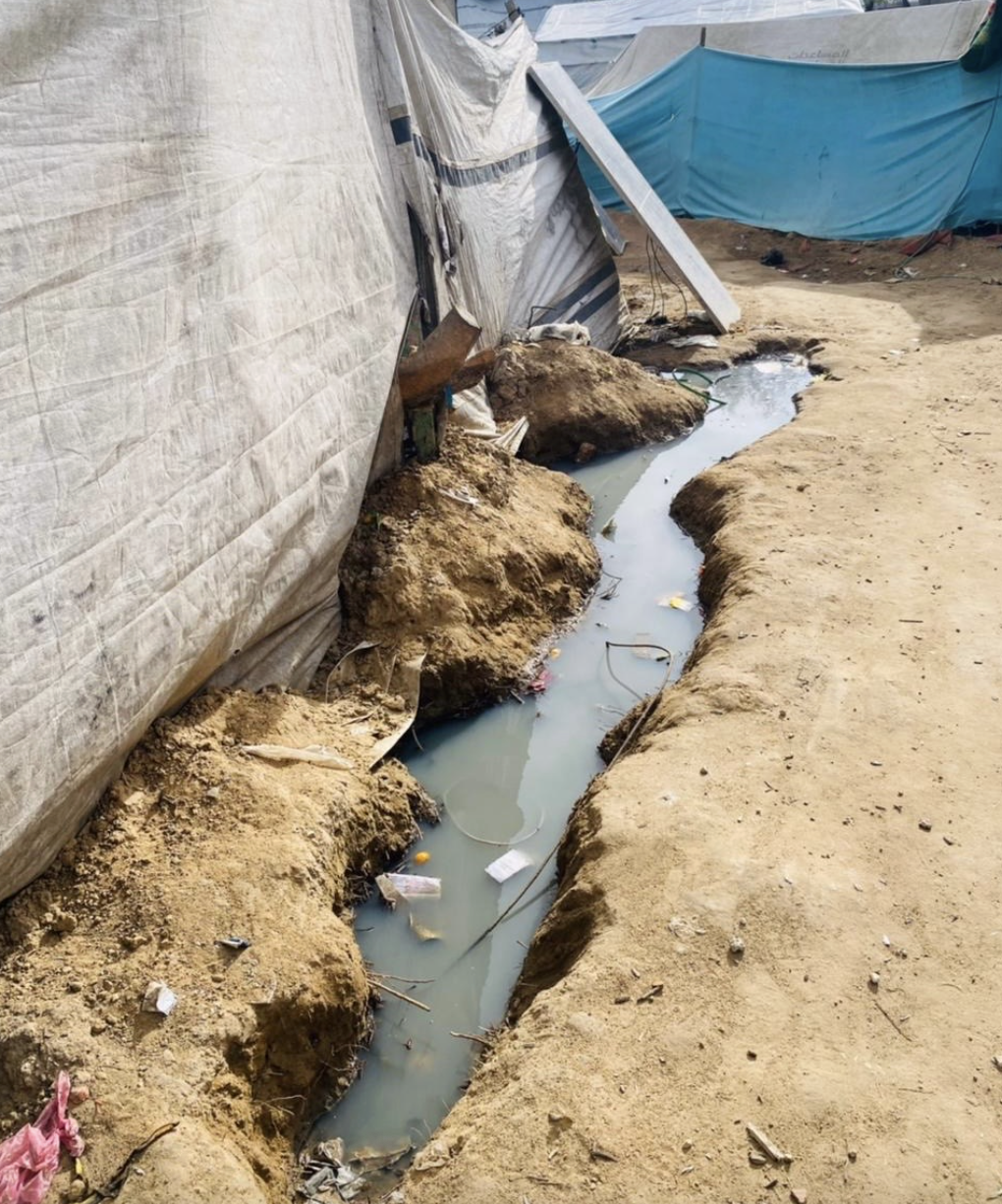
Sewage and poor sanitation in Al-Zawaida camp, Gaza, January 2026. Photo by the author.
While sanitary pads are now more accessible than before, women in the camps still face challenges obtaining them, as supplies can be limited or too expensive for some. Many continue to improvise with old clothes when needed. Temporary toilets in the camps are usually little more than holes in the sand, covered with hanging sheets, and shared by dozens of people.
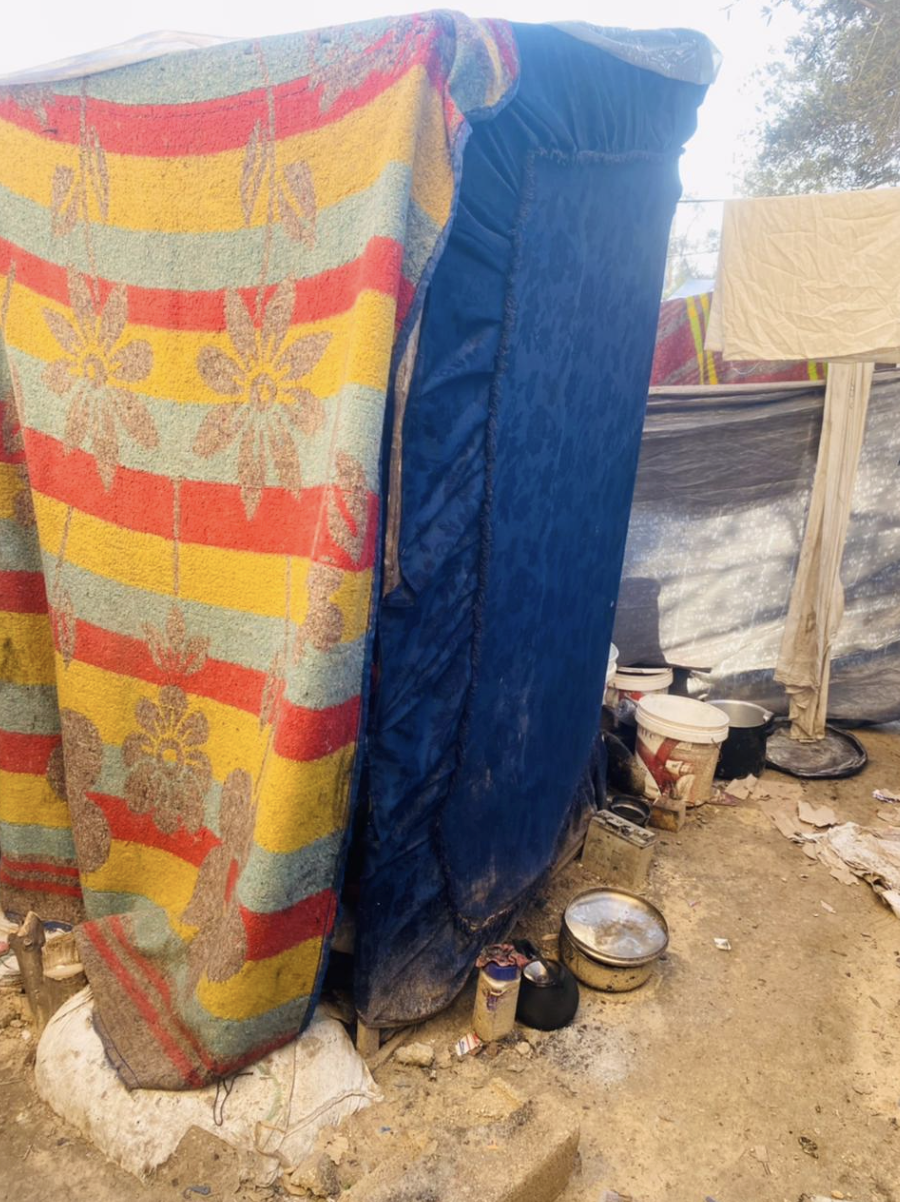
Makeshift toilet in Al-Zawaida camp, Gaza, January 2026. Photo by the author.
I also spoke with a mother of five daughters, who asked not to be named to protect her privacy. She told me that obtaining even the simplest daily necessities in the camps is extremely difficult, including sanitary pads, which are too expensive for her to afford. She has tried using pieces of cloth as a substitute.
A 2025 UN report found that despite some aid reaching Gaza, access to menstrual hygiene products remains severely limited. An estimated three‑quarters of the need for sanitary supplies goes unmet, forcing many women and girls to rely on unsafe alternatives or makeshift materials, increasing their risk of infection and discomfort.
Many women in Gaza rely on community and solidarity, and do more than care for their own — they reach out to help each other, sharing water and food, taking turns looking after one another’s children so mothers can carry out other tasks or get a rare moment of rest.
The efforts do not stop at their homes. In my camp in Al-Zawaida, some young women set up a dedicated tent for teaching children. Every afternoon, they hold lessons in Arabic, English, and math, helping displaced children keep up with their school curriculum despite the harsh conditions.
Despite everything they have lost in Gaza’s camps, women move forward because survival leaves them no other choice.
Subscribe to the Palestine Nexus Newsletter: