Survivors Don’t Survive: The Story of a Family Killed Twice
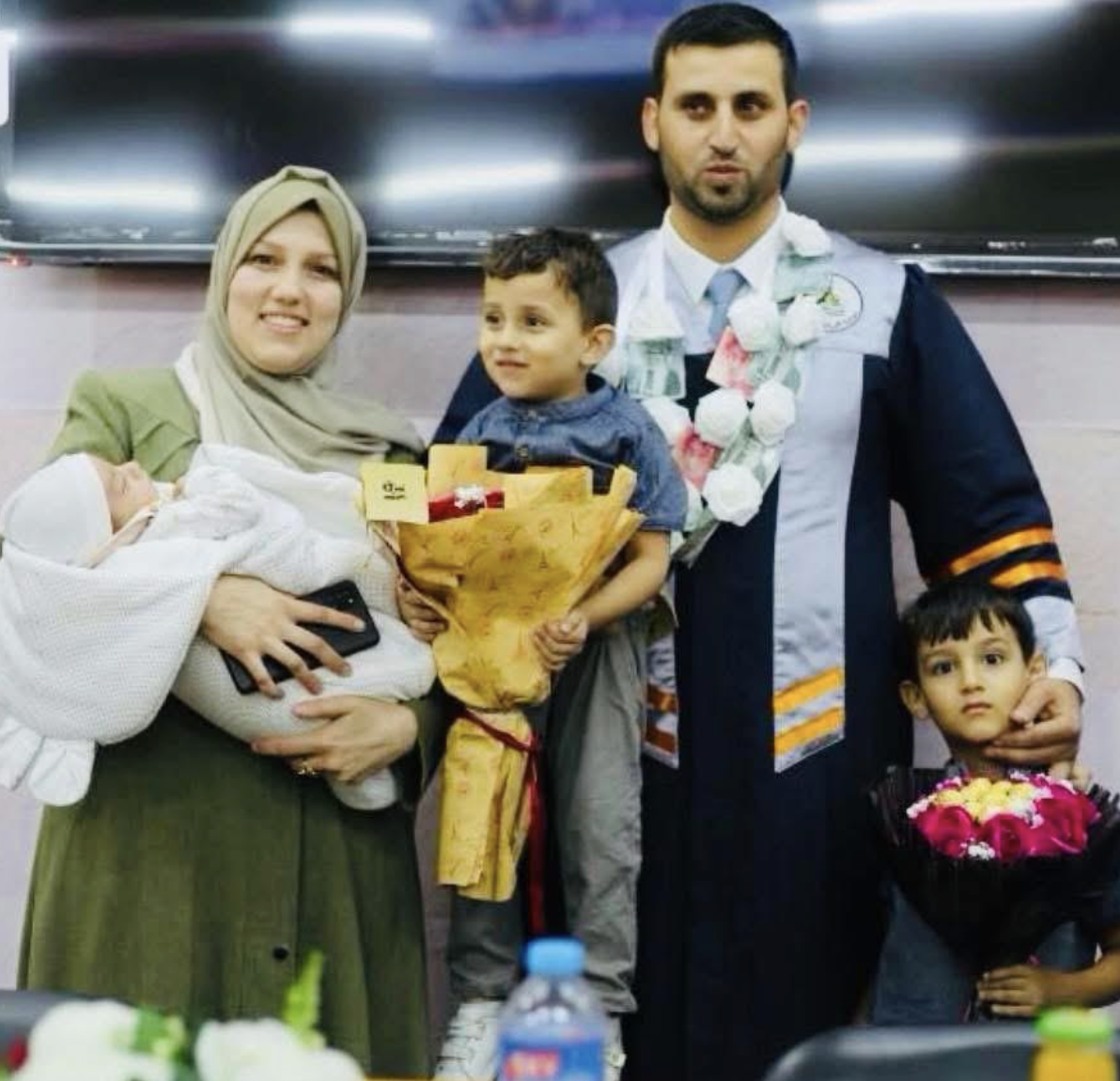
(L-R) Baby Mousa, Nour, Khaled, Ahmed and Mohammed of the Zeinati family. Photo courtesy of the author.
December 2, 2025 — Suddenly, everything went blank.
I didn’t know if I was alive or dead. I tried to move, but my limbs felt alien. I knew somehow that nothing would ever be the same. One moment, I laid peacefully on my bed, awake, just staring into the stillness. The next, I found myself amid rubble, struggling to open my eyes. I couldn’t remember how I got there. I didn't know where my body ended and the rubble began. The world outside had collapsed, but inside me, life still flickered.
Liquid was flowing down my face, but I couldn’t see what it was. I couldn’t breathe. Then a faint voice began to creep toward me: "Is anyone alive? Is anyone alive here?"
I could hear distant cries, the crunch of boots on debris, and the low hum of something burning began to fill the silence. Each sound felt like a thread pulling me back toward life. I couldn't see, I couldn't move, but I could hear. It meant someone was near. It meant I wasn't alone. I realized that the liquid sliding down my face was blood, and that the voice calling me was from the civil defence who had come to look for any survivors in the rubble.
All of this happened on a heavy autumn night, on October 22, 2023. My family and I had just returned home after hours of fetching water from wells and cooking over fire. Electricity had been cut for days. None of us had yet fallen asleep. Some followed the news on a phone; others whispered prayers.
At 9:30 pm, three missiles from F-16 fighter jets struck our neighborhood. The explosion tore through our home. I was pulled out of the rubble with broken arms, deep wounds across my face, and broken glass in my ears and hair. My sisters, my brother and his wife were also injured, but we miraculously survived.
But our neighbours were not as lucky. Four of them were killed in the bombing: Hesham, his son Malik, and two of Nour’s sons, Khaled and Mousa.
Two years of genocide have ravaged Gaza. At least 70,000 Palestinians have been killed, according to the Palestinian Ministry of Health. At least 20,000 of them are children, meaning that one Palestinian child has been killed every hour by Israeli forces. Everyone in Gaza knows someone who has been killed, but some families have been hit harder than others. Gaza’s Government Media Office says that more than 2,700 families have been wiped off the civil registry.
The numbers mask the stories, though, such as that of the Zeinati family: Mousa, Nour, their daughter Shahd and five sons, Hesham, Mohammed, Saleh, Karim, Shahd, and Ahmad. Ahmad married a pharmacist, Nour. They have four children: Mohammed, Khaled, Mousa, and a second Khaled.
The Zeinatis were more than just our neighbors. They were part of the life of our neighborhood. The children’s laughter spilled from their balcony; the smell of the Al maftool––a traditional Palestinian dish made from large, hand-rolled grains of whole wheat and bulgur––wafted from their kitchen; the warmth of their greetings welcomed us each evening. I remember them waving from the balcony, or greeting me from the doorway as I passed by. Their presence was constant and comforting. You didn’t just know the Zeinati family, you felt their warm presence every day.
The strike destroyed not just our home but generations of love, labor, and memory. One moment, they were alive, the next they were gone, buried beneath the rubble. No birthdays left to celebrate, no stories left to tell, no one to carry their names. I can still hear Shahd screaming, calling out for her brother Saleh, desperate to know if anyone had survived beneath the rubble.
If only it had ended with Hesham, and their four-year-old son Malik. But there was no end to the suffering. Ahmed and Nour lost their two youngest sons, Khaled, 4, and Mousa, 2. The strike killed four people, fractured the spine and pelvis of Hesham’s wife, and left severe psychological and physical injuries on every member of the family.
A week after the massacre, I visited Nour at Nasser Hospital in Khan Younis. The corridors were soaked in blood and tears, and doctors rushed between the wounded under relentless shelling. Nour wasn’t alone in the room. It was filled with burn victims and those with broken bones. I scanned the faces of the women, exhausted and broken, and then I saw Nour.
She was sobbing uncontrollably for her lost children. Her pain was heavier than anything I could carry. I gently wiped Nour's tears with my hand and whispered, "Everything will be alright. Don't worry.” But her eyes refused to believe me. Her tears poured as if she had never cried before. Then, in a voice cracked by grief, she said: "They amputated my soul, clipped my wings, and killed Mousa and Khaled." She broke down, sobbing uncontrollably. I couldn't hold myself together either, unable to bear the pain in Nour's heart. It felt like I was exiled from life into the hell of pain. I held her tightly, and the silence between us shattered. We wept together, one voice, mourning not only those we lost, but the parts of ourselves we buried with them.
In Gaza, there is no time to cry, no space to collapse, not even a moment to heal. After months of fear, hunger, and displacement, Nour chose to give her life a new meaning. I saw her in her ninth month of pregnancy at the end of 2024. Resting her hand on her belly, she told me: "I will name my baby Khaled, after his martyred brother. I want him to live again to carry the soul of the one who was taken. Maybe that will give my life some meaning."
Sometimes, however, history repeats itself. May 18, 2025 became one of those nights.
Their tent in the Sanabel Camp in Al- Mawasi, Khan Yunis was bombed multiple times. Ahmad, Nour, their son Mohammad, and six-month old Khaled, were all killed. Their bodies were torn apart. We got the news in the cruelest way––through the screams of their surviving relatives. It shattered me and my family.
In Gaza, survivors don’t get to simply survive. The displaced are hunted by missiles of tyranny. The names of new borns are written in the population registry, then erased shortly after they are born, rewritten as martyrs.
And while justice may begin with data and reports, it is only fully achieved through our stories, the courage to speak out, and the insistence on remembering. My answer to the question "Is anyone alive?" is this: We are still here. We still dream. We still love. And we still want to live.
Reported and written before the ceasefire took effect.
Subscribe to the Palestine Nexus Newsletter: